MAPF

MAPF Portfolio Composition: June 2014

Turnover picked up in June, to about 10%.

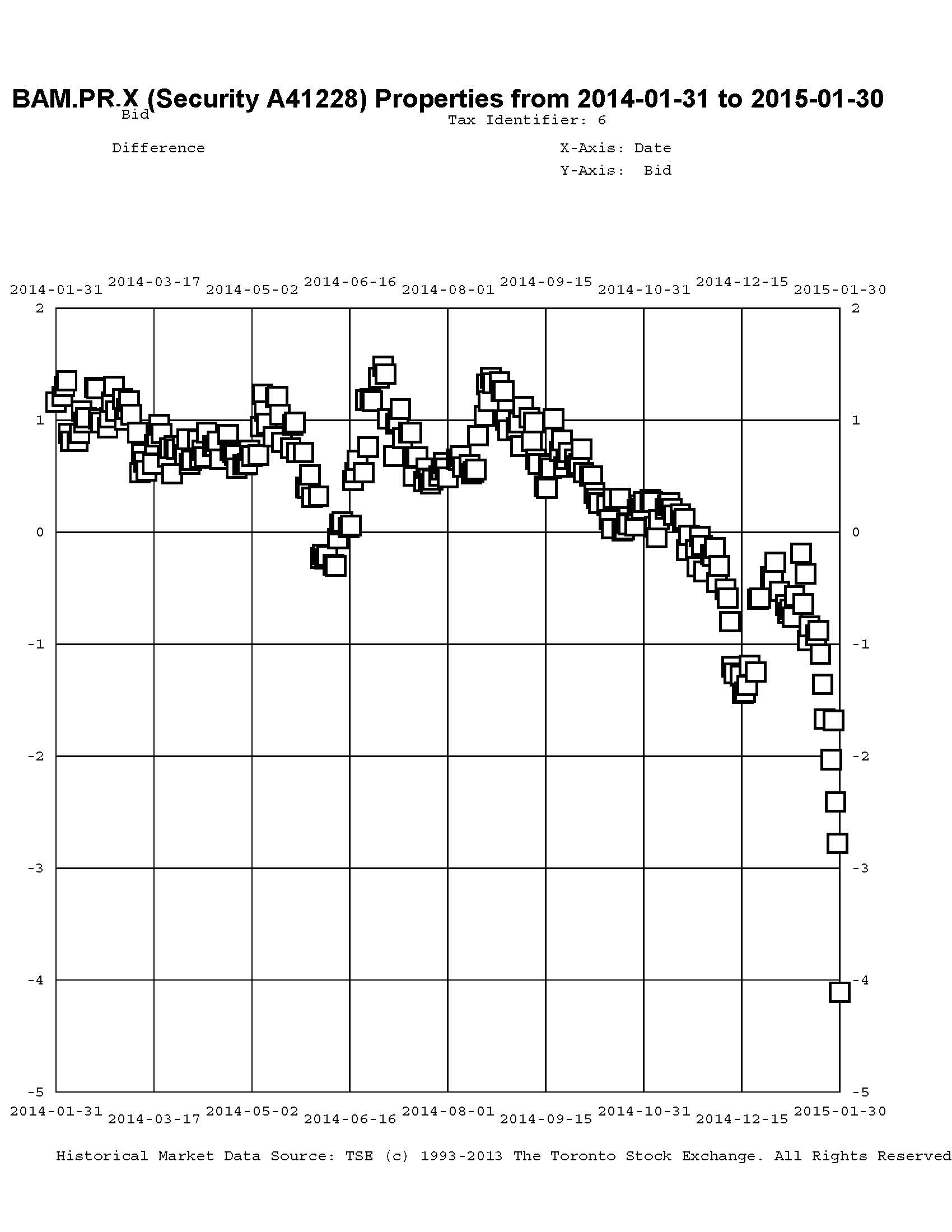
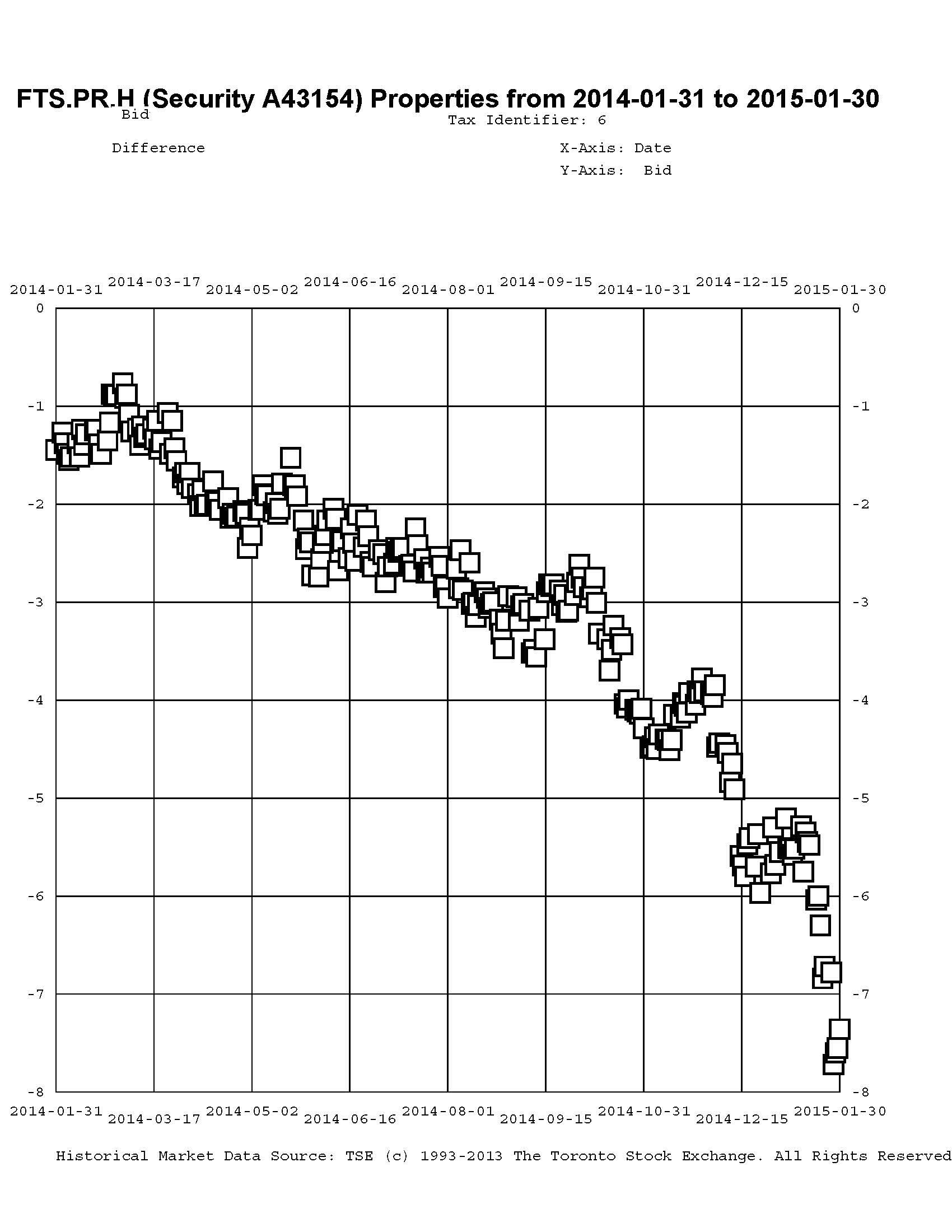
There is extreme segmentation in the marketplace, with OSFI’s NVCC rule changes in February 2011 having had the effect of splitting the formerly relatively homogeneous Straight Perpetual class of preferreds into three parts:

  • Unaffected Straight Perpetuals
  • DeemedRetractibles explicitly subject to the rules (banks)
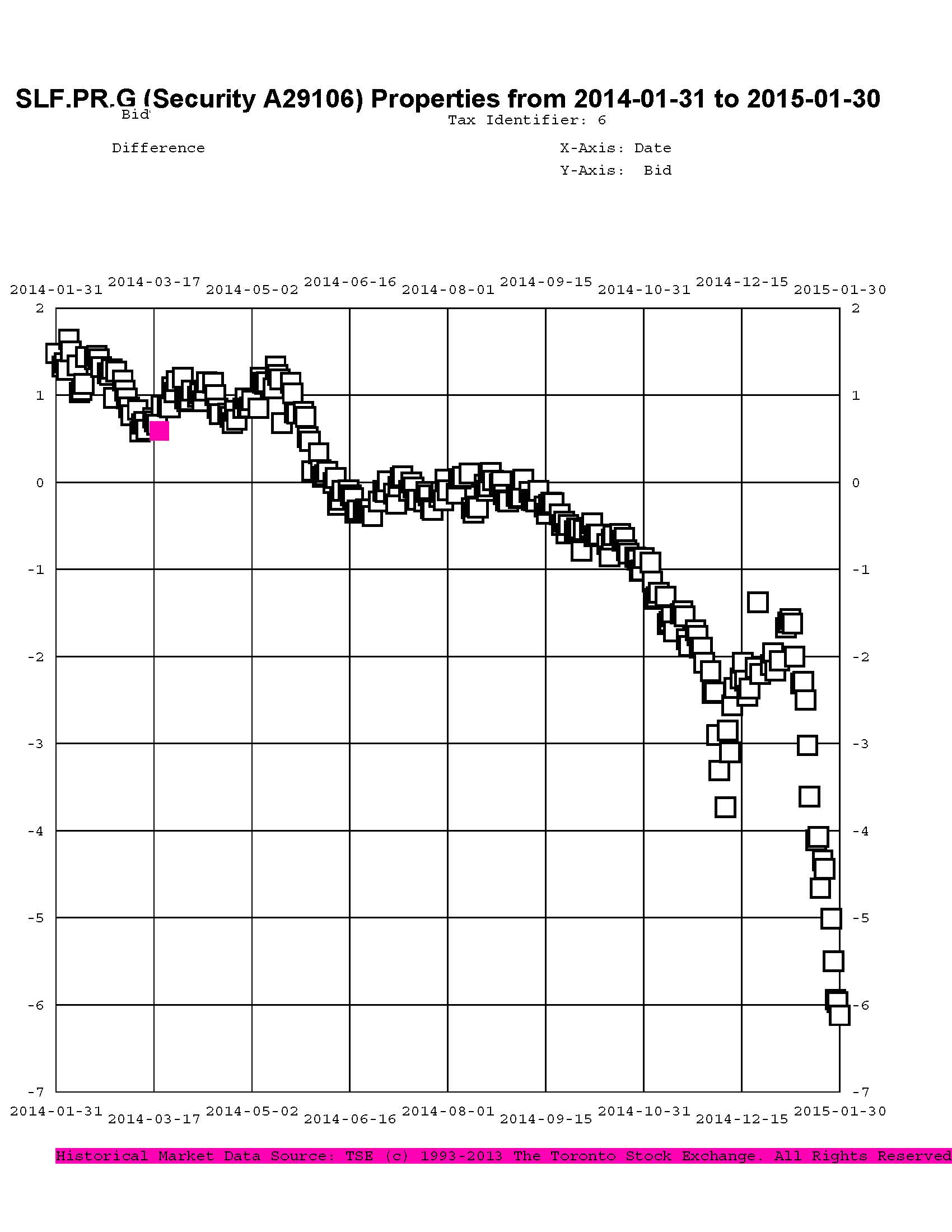
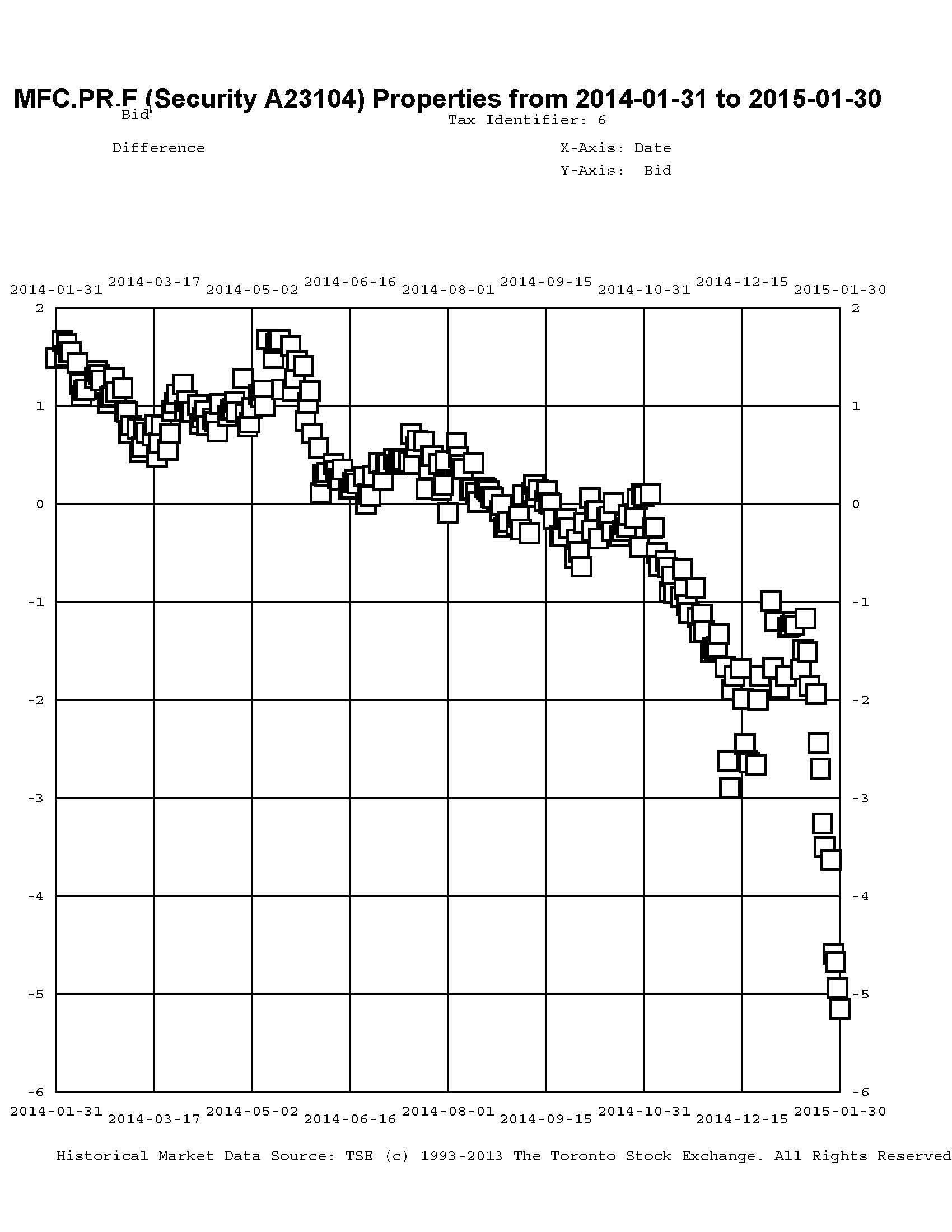
  • DeemedRetractibles considered by me, but not (yet!) by the market, to be likely to be explicitly subject to the rules in the future (insurers and insurance holding companies)

This segmentation, and the extreme valuation differences between the segments, has cut down markedly on the opportunities for trading. Another trend that hasn’t helped was the migration of PerpetualDiscounts into PerpetualPremiums (due to price increases) in early 2013 – many of the PerpetualPremiums had negative Yields-to-Worst and those that don’t aren’t particularly thrilling; speaking very generally, PerpetualPremiums are to be avoided, not traded! This effect has caused the first of the three segments noted above to be untradeable for most practical purposes. Last summer’s downdraft reversed the trend and resulted in a large pool of PerpetualDiscounts, but due to their long term they are still, as a class, inferior to DeemedRetractibles.
To make this more clear, it used to be that there were 70-odd Straight Perpetuals and I was more or less indifferent as to which ones I owned (subject, of course, to issuer concentration concerns and other risk management factors). Thus, if any one of these 70 were to go down in price by – say – $0.25, I would quite often have something in inventory that I’d be willing to swap for it. The segmentation means that I am no longer indifferent; in addition to checking the valuation of a potential buy to other Straights, I also have to check its peer group. This cuts down on the potential for trading.

There is no real hope that this situation will be corrected in the near-term. OSFI has indicated that the long-promised “Draft Definition of Capital” for insurers will not be issued “for public consultation in late 2012 or early 2013”, as they fear that it might encourage speculation in the marketplace. It is not clear why OSFI is so afraid of informed speculation, since the constant speculation in the marketplace is currently less informed than it would be with a little bit of regulatory clarity.

As a result of this delay, I have extended the Deemed Maturity date for insurers and insurance holding companies by three years (to 2025-1-31), in the expectation that when OSFI finally does provide clarity, they will allow the same degree of lead-in time for these companies as they did for banks. This had a major effect on the durations of preferred shares subject to the change but, fortunately, not much on their calculated yields as most of these issues were either trading near par when the change was made or were trading at sufficient premium that a par call was expected on economic grounds. However, with the declines in the market over the past nine months, the expected capital gain on redemption of the insurance-issued DeemedRetractibles has become an important component of the calculated yield.

Due to further footdragging by OSFI, I will be extending the DeemedMaturity date for insurance issues by another two years in the near future.

Sectoral distribution of the MAPF portfolio on June 30 was as follows:

MAPF Sectoral Analysis 2014-06-30
HIMI Indices Sector Weighting YTW ModDur
Ratchet 0% N/A N/A
FixFloat 0% N/A N/A
Floater 0% N/A N/A
OpRet 0% N/A N/A
SplitShare 15.2% (-0.6) 4.20% 5.69
Interest Rearing 0% N/A N/A
PerpetualPremium 0% N/A N/A
PerpetualDiscount 8.2% (-0.1) 5.17% 15.18
Fixed-Reset 17.0% (+7.5) 4.14% 8.82
Deemed-Retractible 48.4% (-7.2) 5.54% 8.24
Scraps (Various) 11.0% (+0.5) 5.84% 10.88
Cash 0.2% (0) 0.00% 0.00
Total 100% 5.09% 8.79
Totals and changes will not add precisely due to rounding. Bracketted figures represent change from May month-end. Cash is included in totals with duration and yield both equal to zero.
DeemedRetractibles are comprised of all Straight Perpetuals (both PerpetualDiscount and PerpetualPremium) issued by BMO, BNS, CM, ELF, GWO, HSB, IAG, MFC, NA, RY, SLF and TD, which are not exchangable into common at the option of the company. These issues are analyzed as if their prospectuses included a requirement to redeem at par on or prior to 2022-1-31 (banks) or 2025-1-3 (insurers and insurance holding companies), in addition to the call schedule explicitly defined. See OSFI Does Not Grandfather Extant Tier 1 Capital, CM.PR.D, CM.PR.E, CM.PR.G: NVCC Status Confirmed and the January, February, March and June, 2011, editions of PrefLetter for the rationale behind this analysis. (all recent editions have a short summary of the argument included in the “DeemedRetractible” section)

Note that the estimate for the time this will become effective for insurers and insurance holding companies was extended by three years in April 2013, due to the delays in OSFI’s providing clarity on the issue.

The “total” reflects the un-leveraged total portfolio (i.e., cash is included in the portfolio calculations and is deemed to have a duration and yield of 0.00.). MAPF will often have relatively large cash balances, both credit and debit, to facilitate trading. Figures presented in the table have been rounded to the indicated precision.

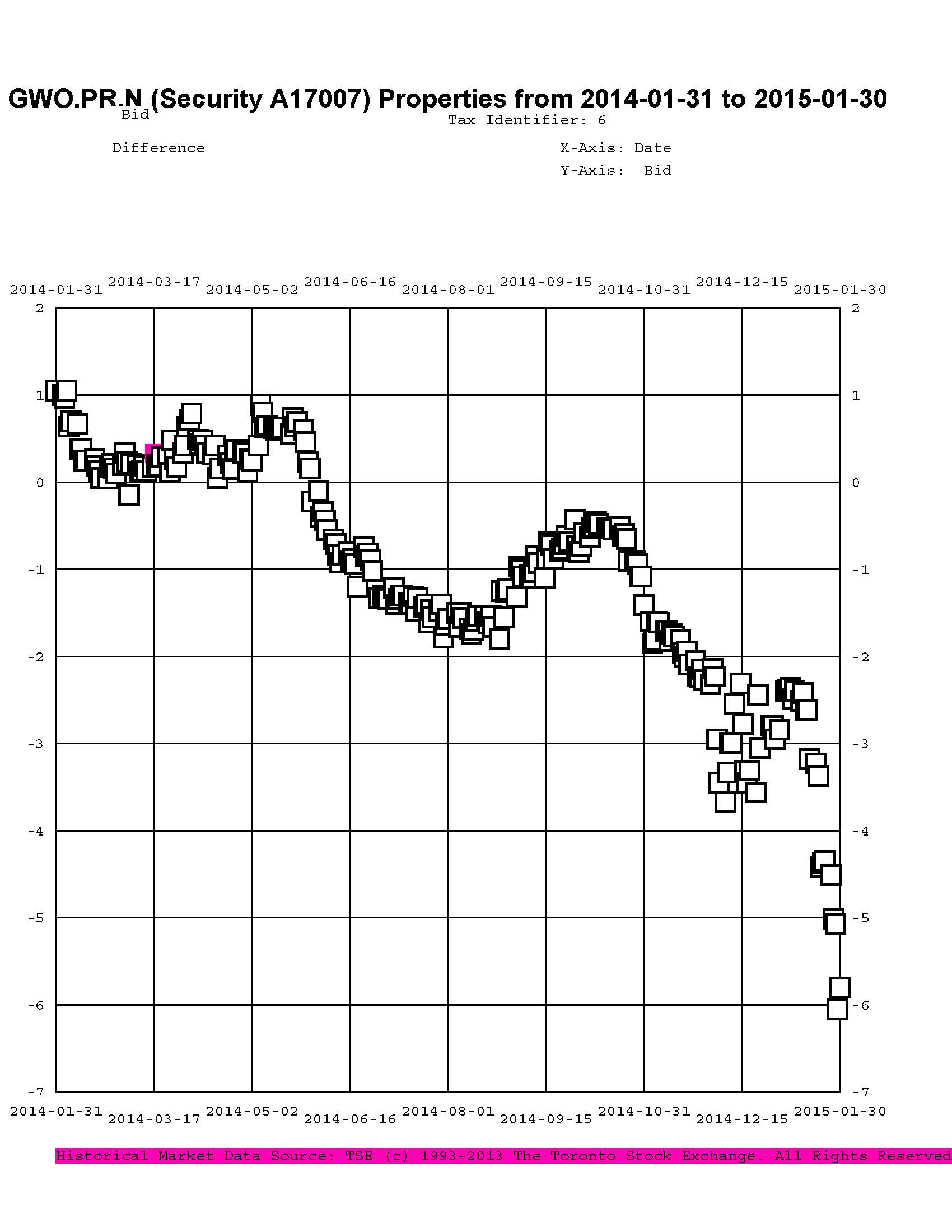
There were significant trades at mid-month into FixedResets (mainly GWO.PR.N at about 21.83) from DeemedRetractibles (mainly GWO.PR.I at about 22.84). Sadly, this trade was underwater by about thirty cents at month-end, with bid prices of 21.48 and 22.81 respectively, but we will see what the year’s second half brings.

Credit distribution is:

MAPF Credit Analysis 2014-6-30
DBRS Rating Weighting
Pfd-1 0 (0)
Pfd-1(low) 28.0% (-0.8)
Pfd-2(high) 49.8% (-2.6)
Pfd-2 0%
Pfd-2(low) 10.9% (+1.9)
Pfd-3(high) 0.4% (-0.6)
Pfd-3 4.7% (+0.3)
Pfd-3(low) 3.0% (+0.2)
Pfd-4(high) 0.6% (+0.6)
Pfd-4 0%
Pfd-4(low) 0.8% (0)
Pfd-5(high) 1.4% (0)
Cash 0.2% (0)
Totals will not add precisely due to rounding. Bracketted figures represent change from May month-end.
A position held in NPI.PR.A is not rated by DBRS, but has been included as “Pfd-3(high)” in the above table on the basis of its S&P rating of P-3(high).

Liquidity Distribution is:

MAPF Liquidity Analysis 2014-6-30
Average Daily Trading Weighting
<$50,000 1.4% (-0.1)
$50,000 – $100,000 25.7% (-0.6)
$100,000 – $200,000 32.6% (+10.2)
$200,000 – $300,000 32.9% (-9.4)
>$300,000 7.2% (-0.1)
Cash 0.2% (0)
Totals will not add precisely due to rounding. Bracketted figures represent change from May month-end.

The apparent decline in liquidity is due to the migration of GWO.PR.I from the $200-300M category to the $100-200M category and to the large swap of this issue (noted above) for GWO.PR.N, which was in the lower category in both May and June.

MAPF is, of course, Malachite Aggressive Preferred Fund, a “unit trust” managed by Hymas Investment Management Inc. Further information and links to performance, audited financials and subscription information are available the fund’s web page. The fund may be purchased either directly from Hymas Investment Management or through a brokerage account at Odlum Brown Limited. A “unit trust” is like a regular mutual fund, but is sold by offering memorandum rather than prospectus. This is cheaper, but means subscription is restricted to “accredited investors” (as defined by the Ontario Securities Commission) or those who subscribe for $150,000+. Fund past performances are not a guarantee of future performance. You can lose money investing in MAPF or any other fund.

A similar portfolio composition analysis has been performed on the Claymore Preferred Share ETF (symbol CPD) (and other funds) as of August 31, 2012, and published in the October (mainly methodology), November (most funds), and December (ZPR) 2012, PrefLetter. While direct comparisons are difficult due to the introduction of the DeemedRetractible class of preferred share (see above) it is fair to say:

  • MAPF credit quality is better
  • MAPF liquidity is a bit lower
  • MAPF Yield is higher
  • Weightings
    • MAPF is much more exposed to DeemedRetractibles
    • MAPF is much less exposed to Operating Retractibles
    • MAPF is much more exposed to SplitShares
    • MAPF is less exposed to FixFloat / Floater / Ratchet
    • MAPF weighting in FixedResets is much lower
Market Action

July 4, 2014

Nothing happened today.

The Canadian preferred share market pulled back today, with PerpetualDiscounts losing 10bp, FixedResets off 2bp and DeemedRetractibles down 4bp. Floaters did quite well, but apart from them there was little volatility. Volume was pathetic.

HIMIPref™ Preferred Indices
These values reflect the December 2008 revision of the HIMIPref™ Indices

Values are provisional and are finalized monthly
Index Mean
Current
Yield
(at bid)
Median
YTW
Median
Average
Trading
Value
Median
Mod Dur
(YTW)
Issues Day’s Perf. Index Value
Ratchet 3.13 % 3.12 % 23,187 19.43 1 0.1674 % 2,536.2
FixedFloater 4.25 % 3.53 % 29,318 18.27 1 0.5851 % 4,039.5
Floater 2.85 % 2.94 % 46,758 19.92 4 1.1795 % 2,780.9
OpRet 4.02 % -5.84 % 87,870 0.08 1 -0.0392 % 2,720.0
SplitShare 4.67 % 4.04 % 89,288 4.07 7 -0.2484 % 3,121.0
Interest-Bearing 0.00 % 0.00 % 0 0.00 0 -0.0392 % 2,487.2
Perpetual-Premium 5.51 % -4.51 % 80,269 0.08 17 -0.0392 % 2,422.5
Perpetual-Discount 5.24 % 5.15 % 112,055 15.04 20 -0.0980 % 2,570.8
FixedReset 4.38 % 3.59 % 199,323 4.58 76 -0.0198 % 2,561.8
Deemed-Retractible 4.98 % 1.46 % 130,722 0.15 43 -0.0433 % 2,547.9
FloatingReset 2.67 % 2.30 % 118,659 3.91 6 -0.0143 % 2,508.3
Performance Highlights
Issue Index Change Notes
BAM.PR.X FixedReset -1.49 % YTW SCENARIO
Maturity Type : Limit Maturity
Maturity Date : 2044-07-04
Maturity Price : 22.05
Evaluated at bid price : 22.41
Bid-YTW : 3.93 %
TD.PR.S FixedReset 1.03 % YTW SCENARIO
Maturity Type : Call
Maturity Date : 2018-07-31
Maturity Price : 25.00
Evaluated at bid price : 25.24
Bid-YTW : 3.07 %
BAM.PR.B Floater 1.30 % YTW SCENARIO
Maturity Type : Limit Maturity
Maturity Date : 2044-07-04
Maturity Price : 17.89
Evaluated at bid price : 17.89
Bid-YTW : 2.95 %
BAM.PR.K Floater 1.65 % YTW SCENARIO
Maturity Type : Limit Maturity
Maturity Date : 2044-07-04
Maturity Price : 17.82
Evaluated at bid price : 17.82
Bid-YTW : 2.96 %
BAM.PR.C Floater 1.93 % YTW SCENARIO
Maturity Type : Limit Maturity
Maturity Date : 2044-07-04
Maturity Price : 17.95
Evaluated at bid price : 17.95
Bid-YTW : 2.94 %
Volume Highlights
Issue Index Shares
Traded
Notes
BNA.PR.F SplitShare 144,900 New issue settled today.
YTW SCENARIO
Maturity Type : Hard Maturity
Maturity Date : 2021-10-08
Maturity Price : 25.00
Evaluated at bid price : 24.70
Bid-YTW : 4.71 %
ENB.PF.C FixedReset 128,725 TD bought 10,500 from Scotia at 25.33; Nesbitt bought 16,600 from anonymous at the same price; and RBC crossed 50,000 at the same price again.
YTW SCENARIO
Maturity Type : Limit Maturity
Maturity Date : 2044-07-04
Maturity Price : 23.22
Evaluated at bid price : 25.31
Bid-YTW : 4.10 %
CM.PR.M FixedReset 72,913 Called for redemption.
YTW SCENARIO
Maturity Type : Call
Maturity Date : 2014-08-30
Maturity Price : 25.00
Evaluated at bid price : 24.99
Bid-YTW : 3.82 %
MFC.PR.G FixedReset 64,029 Nesbitt crossed 63,500 at 26.10.
YTW SCENARIO
Maturity Type : Call
Maturity Date : 2016-12-19
Maturity Price : 25.00
Evaluated at bid price : 26.00
Bid-YTW : 2.79 %
BMO.PR.J Deemed-Retractible 52,740 TD crossed two blocks of 25,000 each, both at 25.75.
YTW SCENARIO
Maturity Type : Call
Maturity Date : 2014-08-03
Maturity Price : 25.50
Evaluated at bid price : 25.71
Bid-YTW : 0.27 %
PWF.PR.S Perpetual-Discount 51,513 Scotia crossed 40,000 at 23.85.
YTW SCENARIO
Maturity Type : Limit Maturity
Maturity Date : 2044-07-04
Maturity Price : 23.38
Evaluated at bid price : 23.71
Bid-YTW : 5.13 %
There were 12 other index-included issues trading in excess of 10,000 shares.
Wide Spread Highlights
Issue Index Quote Data and Yield Notes
BAM.PR.C Floater Quote: 17.95 – 18.95
Spot Rate : 1.0000
Average : 0.5416

YTW SCENARIO
Maturity Type : Limit Maturity
Maturity Date : 2044-07-04
Maturity Price : 17.95
Evaluated at bid price : 17.95
Bid-YTW : 2.94 %

MFC.PR.H FixedReset Quote: 26.24 – 27.50
Spot Rate : 1.2600
Average : 0.9471

YTW SCENARIO
Maturity Type : Call
Maturity Date : 2017-03-19
Maturity Price : 25.00
Evaluated at bid price : 26.24
Bid-YTW : 2.77 %

CU.PR.D Perpetual-Discount Quote: 24.22 – 24.74
Spot Rate : 0.5200
Average : 0.3296

YTW SCENARIO
Maturity Type : Limit Maturity
Maturity Date : 2044-07-04
Maturity Price : 23.83
Evaluated at bid price : 24.22
Bid-YTW : 5.10 %

BAM.PR.R FixedReset Quote: 25.40 – 25.84
Spot Rate : 0.4400
Average : 0.2645

YTW SCENARIO
Maturity Type : Limit Maturity
Maturity Date : 2044-07-04
Maturity Price : 23.73
Evaluated at bid price : 25.40
Bid-YTW : 3.83 %

RY.PR.E Deemed-Retractible Quote: 25.56 – 25.97
Spot Rate : 0.4100
Average : 0.2670

YTW SCENARIO
Maturity Type : Call
Maturity Date : 2015-02-24
Maturity Price : 25.25
Evaluated at bid price : 25.56
Bid-YTW : 3.29 %

TD.PR.P Deemed-Retractible Quote: 26.00 – 26.37
Spot Rate : 0.3700
Average : 0.2347

YTW SCENARIO
Maturity Type : Call
Maturity Date : 2014-08-03
Maturity Price : 25.75
Evaluated at bid price : 26.00
Bid-YTW : -10.94 %

Issue Comments

BNA.PR.F Slides on Poor Volume

Partners Value Split Corp. has announced:

the completion of its previously announced issue of 8,000,000 Class AA Preferred Shares, Series 6 (the “Series 6 Preferred Shares”) at an offering price of $25.00 per Series 6 Preferred Share, raising gross proceeds of $200,000,000. The Series 6 Preferred Shares carry quarterly fixed cumulative preferential dividends representing a 4.50% annualized yield on the offering price and have a final maturity of October 8, 2021. The net proceeds of the offering will be used to redeem the Company’s outstanding Class AA Preferred Shares, Series 4 and to pay a special cash dividend to holders of the Company’s capital shares. The Company has granted the underwriters an option, exercisable at any time, not later than 30 days after closing, to purchase up to an additional 1,200,000 Series 6 Preferred Shares, which, if exercised, would increase the gross offering size to $230,000,000.

The Series 6 Preferred Shares have been listed and posted for trading on the Toronto Stock Exchange under the symbol BNA.PR.F.

Prior to the closing of the offering, the Company subdivided the existing capital shares held by Partners Value Fund Inc. so that there are an equal number of preferred shares and capital shares outstanding.

The Company owns a portfolio consisting of 53,160,644 Class A Limited Voting Shares of Brookfield Asset Management Inc. (the “Brookfield Shares”) which is expected to yield quarterly dividends that are sufficient to fund quarterly fixed cumulative preferential dividends for the holders of the Company’s preferred shares and to enable the holders of the Company’s capital shares to participate in any capital appreciation of the Brookfield Shares. Brookfield Asset Management Inc. is a global alternative asset manager with over US$175 billion in assets under management. For more than 100 years Brookfield has owned and operated assets on behalf of shareholders and clients with a focus on property, renewable energy, infrastructure and private equity. Brookfield has a range of public and private investment products and services which leverage its expertise and experience. Brookfield Shares are co-listed on the New York Stock Exchange under the symbol “BAM”, the TSX under the symbol “BAM.A” and the NYSE Euronext under the symbol “BAMA”.

BNA.PR.F is a SplitShare, 4.50%, with 7-year term, announced June 16. It will be tracked by HIMIPref™ and has been assigned to the SplitShares subindex. It is rated Pfd-2(low) by DBRS.

The issue traded 148,800 shares today in a range of 24.70-85 before closing at 24.70-71, 16×3. Vital statistics are:

BNA.PR.F SplitShare YTW SCENARIO
Maturity Type : Hard Maturity
Maturity Date : 2021-10-08
Maturity Price : 25.00
Evaluated at bid price : 24.70
Bid-YTW : 4.71 %
Market Action

July 3, 2014

Moody’s has assigned a negative outlook to Ontario:

Moody’s Investors Service has today changed the outlook on the Province of Ontario’s debt and issuer ratings to negative from stable, and at the same time affirmed the Aa2 ratings. This affects approximately CAD 250 billion in debt securities. Moody’s P-1 rating on Ontario’s commercial paper program remains unchanged.

The change in the outlook reflects Moody’s assessment of risks surrounding the province’s ability to meet its medium term fiscal targets. After several years of weak to moderate economic growth, and higher than previously anticipated deficits projected for the next two years, the province is facing a greater challenge to return to balanced outcomes than previously anticipated. Although the province has exceeded fiscal targets in recent years, consolidated deficits have shown little change over the period 2011/12-2013/14, averaging -9.9% of revenues. The required revenue growth, in an environment of continued slower than average economic growth, and necessary operating expense control to achieve fiscal targets will require a considerable shift from recent trends. The province also continues to face large, ongoing capital expenditures which also places pressure on the province’s fiscal position.

Ontario’s rating could be downgraded if the province fails to provide clear signals of its ability and willingness to implement the required measures to redress the current fiscal pressures. Furthermore, if medium-term debt affordability were to deteriorate due to higher-than-expected increases in debt levels or a significant rise in interest rates, the province’s fiscal flexibility would be reduced, exerting downward pressure on the rating.

The outlook could return to stable if the province demonstrates through concrete measures that it will be able to achieve the very constrained expenditure growth rates and expected revenue growth over the term of its fiscal plan.

Oh well. I’m sure the new Ontario Retirement Pension Plan will be a big investor in Ontario bonds.

The political response is standard:

But top cabinet ministers said they were unconcerned about the note from Moody’s.

“The bankers aren’t freaking here,” Finance Minister Charles Sousa said as he headed into a cabinet meeting at Queen’s Park Thursday. “We have controlled our spending, we have taken the necessary steps and we’re not done just yet. We’re still finding more savings in the system.”

Deputy Premier Deb Matthews , who was appointed President of the Treasury Board last week with the task of balancing the budget in three years, brushed off Moody’s warning and said another credit downgrade would not be particularly expensive.

Comrade Peace Prize has taken a firm stand against merit pay:

President Barack Obama criticized the bonus-driven culture of financial trading desks at Wall Street banks as a risk to the stability of the financial system.

Obama said in an interview to be aired tomorrow on American Public Media’s Marketplace radio program that an “unfinished piece of business” is to address banks that “take big risks because the profit incentive and the bonus incentive is there for them.”

Obama said banks need to change “how they work internally” to alter incentives for traders.

“Right now, if you are in one of the big banks, the profit center is the trading desk, and you can generate a huge amount of bonuses by making some big bets,” Obama said. In the event of “a really bad bet,” he added, “you might end up leaving the shop, but in the meantime everybody else is left holding the bag.”

I’m not sure how he reconciles all that with the Volcker Rule, or with the concept of management risk controls, but never mind.

There was a superb US jobs number:

Employers who added 288,000 jobs in June showed they might be taking a more serious look at resumes from the long-term unemployed, who last month accounted for the smallest proportion of U.S. jobless ranks in five years.

Those out of work 27 weeks or longer made up 32.8 percent of unemployed Americans as the overall unemployment rate dropped to an almost six-year low of 6.1 percent, according to Labor Department data released this morning in Washington.

The share of long-term unemployed remains more than twice the historical average of 15.1 percent in data going back to 1948. Other measures of labor market health, including underemployment and participation rates, haven’t returned to pre-recession levels, according to a dashboard of indicators that Federal Reserve Chair Janet Yellen has said she monitors to judge the economic outlook.

About half of the drop in unemployment in the past year is due to the decline among the long-term jobless.

I love it when guys pull a fast one:

A man exploited the perks of business -class travel to feast for free 35 times in a year at Deutsche Lufthansa AG (LHA)’s Munich airport lounge — without ever taking off.

The man used the flexibility of the one-way fare to Zurich to repeatedly reschedule his travel plans after gaining access to food and drink, Munich district court said in a statement. Lufthansa canceled the ticket after more than a year and refunded the price, only for the man to purchase a replacement.

The court ruled that lounge services are provided on the assumption that travelers will seek to fly, and ordered the man to pay Lufthansa 1,980 euros ($2,705), equal to about 55 euros per visit or more than twice the cost of the 744.46-euro ticket. Lufthansa pursued a prosecution only after the man bought the second ticket with the intention of resuming his foraging raids.

Clearly, the Germans have no sense of humour.

And the Mexicans are getting more auto investment – for good reasons and bad:

Mexico has won new auto investments worth $2.4-billion (U.S.) in one week, just $800-million less than the $3.2-billion invested by auto makers in Canada since 2010.

BMW AG said Thursday it will spend $1-billion to build a new plant in Mexico, on the heels of an announcement last week by Daimler AG and Nissan Motor Co. Ltd. that they will invest $1.4-billion to build luxury cars.

In addition to significantly lower labour costs than both Canada and the United States, Mexico is also an export powerhouse, boasting free-trade agreements with more than 40 countries and ports on both the Atlantic and Pacific oceans that operate year-round.

“The large number of international free trade agreements – within the NAFTA area, with the European Union and the MERCOSUR member states, for example – was a decisive factor in the choice of location,” BMW said in a statement announcing the investment.

Mexico’s foreign investment agency, ProMexico, is aggressively courting auto investments and offers generous incentives, industry sources have said.

The federal and Ontario governments offer incentives to auto makers to locate in Canada. But a report issued last year by the Canadian Automotive Partnership Council, an industry-union group set up to advise the governments on the auto sector, complained about the way the Canadian funds are administered.

“In Mexico, for example, rarely will one see repayable contributions or restrictive covenants that can claw back co-investment programs,” the report said. “Through ProMexico, companies can secure cash grants with no strings attached.”

It was another positive day for the Canadian preferred share market, with PerpetualDiscounts gaining 6bp, FixedResets winning 17bp and DeemedRetractibles up 10bp. Volatility was minimal. Volume was low.

HIMIPref™ Preferred Indices
These values reflect the December 2008 revision of the HIMIPref™ Indices

Values are provisional and are finalized monthly
Index Mean
Current
Yield
(at bid)
Median
YTW
Median
Average
Trading
Value
Median
Mod Dur
(YTW)
Issues Day’s Perf. Index Value
Ratchet 3.14 % 3.13 % 23,408 19.42 1 0.0000 % 2,531.9
FixedFloater 4.28 % 3.55 % 30,392 18.23 1 0.4067 % 4,016.0
Floater 2.88 % 2.98 % 46,574 19.80 4 0.5378 % 2,748.5
OpRet 4.02 % -6.43 % 88,647 0.08 1 -0.1566 % 2,721.1
SplitShare 4.69 % 3.72 % 54,804 3.15 6 -0.0200 % 3,128.8
Interest-Bearing 0.00 % 0.00 % 0 0.00 0 -0.1566 % 2,488.2
Perpetual-Premium 5.51 % -2.80 % 79,425 0.08 17 0.1685 % 2,423.4
Perpetual-Discount 5.23 % 5.14 % 111,931 15.03 20 0.0618 % 2,573.4
FixedReset 4.38 % 3.56 % 204,983 6.65 76 0.1720 % 2,562.3
Deemed-Retractible 4.97 % 1.07 % 135,185 0.14 43 0.0953 % 2,549.0
FloatingReset 2.66 % 2.21 % 119,836 3.91 6 0.4096 % 2,508.7
Performance Highlights
Issue Index Change Notes
SLF.PR.I FixedReset 2.32 % YTW SCENARIO
Maturity Type : Call
Maturity Date : 2016-12-31
Maturity Price : 25.00
Evaluated at bid price : 26.50
Bid-YTW : 1.80 %
Volume Highlights
Issue Index Shares
Traded
Notes
CM.PR.O FixedReset 131,850 Recent new issue.
YTW SCENARIO
Maturity Type : Limit Maturity
Maturity Date : 2044-07-03
Maturity Price : 23.26
Evaluated at bid price : 25.31
Bid-YTW : 3.71 %
BMO.PR.T FixedReset 54,876 Recent new issue.
YTW SCENARIO
Maturity Type : Limit Maturity
Maturity Date : 2044-07-03
Maturity Price : 23.25
Evaluated at bid price : 25.32
Bid-YTW : 3.64 %
RY.PR.T FixedReset 52,986 RBC crossed 49,900 at 25.40.
YTW SCENARIO
Maturity Type : Call
Maturity Date : 2014-08-24
Maturity Price : 25.00
Evaluated at bid price : 25.39
Bid-YTW : 0.10 %
SLF.PR.H FixedReset 42,163 RBC crossed 39,900 at 25.40.
YTW SCENARIO
Maturity Type : Call
Maturity Date : 2016-09-30
Maturity Price : 25.00
Evaluated at bid price : 25.46
Bid-YTW : 3.07 %
MFC.PR.H FixedReset 31,800 Nesbitt crossed 25,000 at 26.30.
YTW SCENARIO
Maturity Type : Call
Maturity Date : 2017-03-19
Maturity Price : 25.00
Evaluated at bid price : 26.40
Bid-YTW : 2.53 %
RY.PR.E Deemed-Retractible 25,793 TD crossed 25,000 at 25.68.
YTW SCENARIO
Maturity Type : Call
Maturity Date : 2014-08-02
Maturity Price : 25.50
Evaluated at bid price : 25.71
Bid-YTW : 0.27 %
There were 22 other index-included issues trading in excess of 10,000 shares.
Wide Spread Highlights
Issue Index Quote Data and Yield Notes
MFC.PR.H FixedReset Quote: 26.40 – 27.50
Spot Rate : 1.1000
Average : 0.6040

YTW SCENARIO
Maturity Type : Call
Maturity Date : 2017-03-19
Maturity Price : 25.00
Evaluated at bid price : 26.40
Bid-YTW : 2.53 %

TRP.PR.A FixedReset Quote: 23.26 – 23.55
Spot Rate : 0.2900
Average : 0.1945

YTW SCENARIO
Maturity Type : Limit Maturity
Maturity Date : 2044-07-03
Maturity Price : 22.40
Evaluated at bid price : 23.26
Bid-YTW : 3.70 %

TD.PR.S FixedReset Quote: 25.19 – 25.55
Spot Rate : 0.3600
Average : 0.2712

YTW SCENARIO
Maturity Type : Hard Maturity
Maturity Date : 2022-01-31
Maturity Price : 25.00
Evaluated at bid price : 25.19
Bid-YTW : 3.26 %

CU.PR.F Perpetual-Discount Quote: 22.35 – 22.64
Spot Rate : 0.2900
Average : 0.2245

YTW SCENARIO
Maturity Type : Limit Maturity
Maturity Date : 2044-07-03
Maturity Price : 22.06
Evaluated at bid price : 22.35
Bid-YTW : 5.07 %

TD.PR.Z FloatingReset Quote: 25.30 – 25.59
Spot Rate : 0.2900
Average : 0.2328

YTW SCENARIO
Maturity Type : Call
Maturity Date : 2018-10-31
Maturity Price : 25.00
Evaluated at bid price : 25.30
Bid-YTW : 2.30 %

BAM.PR.Z FixedReset Quote: 26.02 – 26.20
Spot Rate : 0.1800
Average : 0.1372

YTW SCENARIO
Maturity Type : Call
Maturity Date : 2017-12-31
Maturity Price : 25.00
Evaluated at bid price : 26.02
Bid-YTW : 3.58 %

Market Action

ALA.PR.G Reaches Premium On Excellent Volume

AltaGas Ltd. has announced:

that it has closed its previously announced public offering of 8,000,000 Cumulative Redeemable Rate Reset Preferred Shares, Series G (the “Series G Preferred Shares”), at a price of $25.00 per Series G Preferred Share (“the Offering”) for aggregate gross proceeds of $200 million, including 2,000,000 Series G Preferred Shares pursuant to the exercise in full of an underwriters’ option.

The Offering was first announced on June 23, 2014 when AltaGas entered into an agreement with a syndicate of underwriters co-led by RBC Capital Markets, Scotiabank and TD Securities Inc.

Net proceeds will be used to reduce outstanding indebtedness and for general corporate purposes.

The Series G Preferred Shares will commence trading today on the Toronto Stock Exchange (“TSX”) under the symbol ALA.PR.G.

AltaGas is an energy infrastructure business with a focus on natural gas, power and regulated utilities. AltaGas creates value by acquiring, growing and optimizing its energy infrastructure, including a focus on clean energy sources. For more information visit: www.altagas.ca

ALA.PR.G is a FixedReset, 4.75%+306, announced June 23. It will be tracked by HIMIPref™ but relegated to the Scraps subindex on credit concerns. It has been rated Pfd-3 [Stable] by DBRS.

The issue traded 703,300 shares today in a range of 25.05-18 before closing at 25.11-14, 10×62. Vital statistics are:

ALA.PR.G FixedReset YTW SCENARIO
Maturity Type : Limit Maturity
Maturity Date : 2044-07-03
Maturity Price : 23.18
Evaluated at bid price : 25.10
Bid-YTW : 4.53 %
Market Action

July 2, 2014

Something amazing has been said about dark pools:

While money managers don’t always like what happens in the $23 trillion U.S. stock market, they’re too fond of dark pools to let them go extinct, according to a professor whose research was presented to the Senate.

“Dark pools have existed forever,” Robert Battalio of the University of Notre Dame said in a phone interview last week. “You can shut down these dark pools and just new forms will arise somewhere else.”

“There are bad dentists out there, there are bad store clerks, so you’ve got to separate the structure from the bad apple,” Battalio said. “Order flow will always have multiple venues to execute on — upstairs markets — because one size doesn’t fit all.”

The best way for investors to avoid mistreatment is to analyze the performance of their brokers to make sure they’re getting a fair shake, Battalio said.

“analyze the performance of their brokers”? It will never happen, but it’s nice to know I’m not the only guy making ridiculous suggestions.

There’s a new marketing proposal designed to tighten the hegemony of the usual suspects over Canadian finance:

Canada’s newest planned stock exchange is a step closer to reality, as regulators laid out the grounds under which the Aequitas exchange could be approved and sought comments from market users on some of the more controversial aspects.

Aequitas’s Neo Exchange is designed to appeal to traders who are concerned that their trades might be bait for predatory high-frequency trading strategies (a la those detailed in the book Flash Boys), and so has been carefully constructed to try to ensure any such strategies won’t work.

Aequitas is owned by a group of investors that spans brokers and investors, including Barclays, Royal Bank of Canada, BCE Inc., CI Investments, ITG Canada, and OMERS.

This will also appeal to traders who don’t want to analyze the performance of their brokers and are willing to pay extra to avoid having to learn something new.

Bloomberg has a good editorial on the BNP Paribas affair:

Some will argue that the bank got off too lightly. A more telling criticism is that no individuals have been prosecuted.

The documents show that top managers knowingly — flagrantly — conspired to skirt U.S. sanctions. Employees acted on orders from Paris and Geneva-based managers who didn’t want to lose the lucrative business of Sudanese, Cuban and Iranian entities. Those countries were willing to pay dearly to be able to trade internationally while under U.S. embargo. BNP ultimately handled $190 billion in transactions for them.

An excellent jobs indicator hammered Treasuries today:

Treasuries fell a second day after a private jobs report boosted speculation growth is strong enough for the Federal Reserve to consider higher rates. U.S. stocks were little changed near records, while emerging-market equities climbed to a 13-month high and copper gained.

The 10-year Treasury yield rose six basis points to 2.62 percent.

U.S. companies added 281,000 workers to their payrolls in June, figures from the ADP Research Institute showed today, before the Labor Department’s monthly job’s report tomorrow. A gauge of global equities closed at an all-time high yesterday after data showed manufacturing activity expanding in countries from China to the U.K. and the U.S. Federal Reserve Chair Janet Yellen said there is no need to change current monetary policy to address financial stability concerns.

Yellen said last month that accommodative monetary policy, rising property and equity prices and the improving global economy should lead to above-trend growth. She emphasized the need to put more Americans back to work and downplayed concerns about asset-price bubbles and incipient inflation.

Yellen said today that regulatory tools, and not interest rates, should be the main way to promote financial stability. The comments are significant because economists worry that central banks may now be causing a worldwide reach for yield as interest rates are suppressed by monetary policy.

… and a bounce in the loonie is causing concern:

The dollar first hit the 94-cent mark yesterday, during the Canada Day holiday, and pushed higher today to reach 94.1 cents, before slipping below to about 93.8 cents by early afternoon.

Ms. Sutton, Scotiabank’s chief currency strategist, expects the loonie has further room to run, though that has to stop at some point.

“Is it sustainable that CAD sits at 94?” she said, referring to the currency by its symbol.

“It’s probably making the Bank of Canada incredibly uncomfortable, as well as exporters,” Ms. Sutton added, speculating that the central bank will cite the stronger currency in its next policy outing later this month.

The Bank of Canada under Governor Stephen Poloz is counting on stronger exports, which cost less in the U.S. market when the loonie declines.

Bloomberg has an interesting piece on the de-malling of America:

A Dying Breed: What some writers used to call the malling of America is done. Try to find anyone breaking ground for a new regional shopping mall, those hulking structures with 100-plus stores surrounded by vast asphalt parking lots. Since 1990, when 16 million-square-feet of mall space opened, building has tailed off, and 2007 was the first year in more than four decades when no large malls opened in the U.S. Only one has opened since then, in 2012.

Holdout Politicians: Malls are, in large measure, creations of tax policy and regulatory benefits. Mall construction took off in the 1950s, and again in the early 1980s, when changes to the tax code let financiers recover their investments faster with accelerated depreciation schedules, according to historian Thomas Hanchett of the Levine Museum of the New South in Charlotte, North Carolina. Mall developers also took advantage of legal changes in the 1960s and 1970s that allowed companies known as real estate investment trusts to pass almost all of their income through to investors tax-free.

Malls are still getting breaks. Last year, Minnesota’s legislature approved $250 million in tax benefits to help pay for a doubling in size of the country’s second-biggest mall, Mall of America. The money came from a fund set up to reduce economic disparities between rich and poor areas. New Jersey, meanwhile, has funneled $390 million to a struggling mall project in the Meadowlands known as Xanadu that was supposed to open in 2006. The developers now expect the mall to open in 2016 with a new name — American Dream.

It was another good day for the Canadian preferred share market, as it continued its recent tradition of ignoring the bond market completely (at least on a day-to-day basis); PerpetualDiscounts won 18bp, FixedResets were up 6bp and DeemedRetractibles gained 3bp. Volatility was muted. Volume was low.

PerpetualDiscounts now yield 5.21%, equivalent to 6.77% interest at the standard equivalency factor of 1.3x. Long corporates now yield about 4.3%, so the pre-tax interest-equivalent spread is now about 245bp, unchanged from the figure reported June 18.

HIMIPref™ Preferred Indices
These values reflect the December 2008 revision of the HIMIPref™ Indices

Values are provisional and are finalized monthly
Index Mean
Current
Yield
(at bid)
Median
YTW
Median
Average
Trading
Value
Median
Mod Dur
(YTW)
Issues Day’s Perf. Index Value
Ratchet 0.00 % 0.00 % 0 0.00 1 0.1381 % 2,531.9
FixedFloater 4.29 % 3.57 % 30,124 18.20 1 0.5452 % 3,999.8
Floater 2.90 % 2.99 % 44,312 19.78 4 0.1381 % 2,733.8
OpRet 4.01 % -8.40 % 88,801 0.08 1 0.1568 % 2,725.4
SplitShare 4.69 % 3.72 % 54,845 3.15 6 0.1657 % 3,129.4
Interest-Bearing 0.00 % 0.00 % 0 0.00 0 0.1568 % 2,492.1
Perpetual-Premium 5.52 % -6.43 % 80,370 0.08 17 0.1040 % 2,419.4
Perpetual-Discount 5.24 % 5.21 % 112,542 15.03 20 0.1751 % 2,571.8
FixedReset 4.39 % 3.58 % 206,143 8.62 76 0.0562 % 2,557.9
Deemed-Retractible 4.98 % 1.30 % 136,432 0.15 43 0.0296 % 2,546.5
FloatingReset 2.68 % 2.34 % 120,842 3.85 6 -0.3358 % 2,498.5
Performance Highlights
Issue Index Change Notes
IAG.PR.A Deemed-Retractible -1.14 % YTW SCENARIO
Maturity Type : Hard Maturity
Maturity Date : 2025-01-31
Maturity Price : 25.00
Evaluated at bid price : 23.34
Bid-YTW : 5.47 %
ELF.PR.G Perpetual-Discount 1.19 % YTW SCENARIO
Maturity Type : Limit Maturity
Maturity Date : 2044-07-02
Maturity Price : 21.78
Evaluated at bid price : 22.16
Bid-YTW : 5.36 %
TRP.PR.B FixedReset 1.29 % YTW SCENARIO
Maturity Type : Limit Maturity
Maturity Date : 2044-07-02
Maturity Price : 20.35
Evaluated at bid price : 20.35
Bid-YTW : 3.54 %
Volume Highlights
Issue Index Shares
Traded
Notes
ENB.PF.C FixedReset 146,550 TD crossed blocks of 50,000 and 40,000, both at 25.21. Dejsardins bought 14,900 from anonymous at 25.30.
YTW SCENARIO
Maturity Type : Limit Maturity
Maturity Date : 2044-07-02
Maturity Price : 23.22
Evaluated at bid price : 25.31
Bid-YTW : 4.10 %
PWF.PR.R Perpetual-Premium 100,931 Desjardins crossed 100,000 at 25.70.
YTW SCENARIO
Maturity Type : Call
Maturity Date : 2021-04-30
Maturity Price : 25.00
Evaluated at bid price : 25.75
Bid-YTW : 5.17 %
GWO.PR.N FixedReset 97,643 Desjardins crossed blocks of 71,000 and 21,400, both at 21.50.
YTW SCENARIO
Maturity Type : Hard Maturity
Maturity Date : 2025-01-31
Maturity Price : 25.00
Evaluated at bid price : 21.50
Bid-YTW : 4.70 %
BMO.PR.P FixedReset 82,495 Scotia crossed 25,00 at 25.70. TD crossed 50,000 at the same price.
YTW SCENARIO
Maturity Type : Call
Maturity Date : 2015-02-25
Maturity Price : 25.00
Evaluated at bid price : 25.65
Bid-YTW : 2.21 %
ENB.PR.D FixedReset 66,629 Nesbitt crossed blocks of 25,000 and 27,000, both at 24.96.
YTW SCENARIO
Maturity Type : Limit Maturity
Maturity Date : 2044-07-02
Maturity Price : 23.25
Evaluated at bid price : 24.89
Bid-YTW : 3.86 %
BMO.PR.S FixedReset 62,010 Scotia crossed 25,000 at 25.50. TD crossed 25,000 at the same price.
YTW SCENARIO
Maturity Type : Limit Maturity
Maturity Date : 2044-07-02
Maturity Price : 23.33
Evaluated at bid price : 25.51
Bid-YTW : 3.73 %
There were 22 other index-included issues trading in excess of 10,000 shares.
Wide Spread Highlights
Issue Index Quote Data and Yield Notes
MFC.PR.F FixedReset Quote: 23.10 – 23.70
Spot Rate : 0.6000
Average : 0.4016

YTW SCENARIO
Maturity Type : Hard Maturity
Maturity Date : 2025-01-31
Maturity Price : 25.00
Evaluated at bid price : 23.10
Bid-YTW : 4.13 %

GWO.PR.N FixedReset Quote: 21.50 – 21.92
Spot Rate : 0.4200
Average : 0.2548

YTW SCENARIO
Maturity Type : Hard Maturity
Maturity Date : 2025-01-31
Maturity Price : 25.00
Evaluated at bid price : 21.50
Bid-YTW : 4.70 %

RY.PR.E Deemed-Retractible Quote: 25.52 – 25.81
Spot Rate : 0.2900
Average : 0.1871

YTW SCENARIO
Maturity Type : Call
Maturity Date : 2016-02-24
Maturity Price : 25.00
Evaluated at bid price : 25.52
Bid-YTW : 3.50 %

SLF.PR.I FixedReset Quote: 25.90 – 26.26
Spot Rate : 0.3600
Average : 0.2574

YTW SCENARIO
Maturity Type : Call
Maturity Date : 2016-12-31
Maturity Price : 25.00
Evaluated at bid price : 25.90
Bid-YTW : 2.77 %

GWO.PR.L Deemed-Retractible Quote: 25.70 – 25.99
Spot Rate : 0.2900
Average : 0.1958

YTW SCENARIO
Maturity Type : Call
Maturity Date : 2017-12-31
Maturity Price : 25.25
Evaluated at bid price : 25.70
Bid-YTW : 5.07 %

IAG.PR.A Deemed-Retractible Quote: 23.34 – 23.60
Spot Rate : 0.2600
Average : 0.1759

YTW SCENARIO
Maturity Type : Hard Maturity
Maturity Date : 2025-01-31
Maturity Price : 25.00
Evaluated at bid price : 23.34
Bid-YTW : 5.47 %

Issue Comments

POW.PR.F Sinking Fund, Part 3

Assiduous Readers of the post POW.PR.F Sinking Fund will remember that Power Corporation is required to make all reasonable efforts to purchase 80,000 shares of this issue every year, but have missed their target in each of the past three years.

In addition it will be remembered that this repurchase is not a “Normal Course Issuer Bid”, so there are no fancy rules of which I am aware that prohibit things like buying on an uptick, or whatever.

I have written them, pointing out that the offer price of POW.PR.F has not exceeded the sinking fund upper limit price of $50,00 on any occasion in the last three calendar years, and asking them to clarify the meaning of the word “reasonable”, but have not yet received a reply.

While waiting, I took four snapshots of the market for POW.PR.F today:

… one at 1:30pm …

POWPRF_630_130
Click for Big

… the second at 2:30pm …

POWPRF_630_230
Click for Big

… the third at 3:35pm …

POWPRF_630_335
Click for Big

… and the fourth at 3:55pm …

POWPRF_630_355
Click for Big

So, I will await their 14Q2 report with great interest, and if they have not met their 20,000 share per quarter quota again in the past quarter, I will ask them to clarify why these offers were not lifted.

I enjoy being a prick.

Market Action

June 30, 2014

The OSC says it can’t enforce OBSI compensation recommendations:

The Ontario Securities Commission (OSC) says that it does not have the authority to require dealers to comply with compensation recommendations from the Ombudsman for Banking Services and Investments (OBSI).

The OSC published the final version of its statement of priorities for the current fiscal year today, defending its commitment to investor protection and promising to hold a summit this fall to examine seniors’ issues. But it also declared that it couldn’t enforce OBSI’s recommendations even if it wanted to, without first amending securities legislation.

Responding to comments it received on a draft version of the statement, the OSC notes: “Some commenters have suggested that the OSC should compel payments to investors [when OBSI rules in their favour]. The OSC does not have this authority and would need legislation to expand its powers in order to force binding decisions.”

Still, the regulator reiterates its belief in the importance of having a single dispute-resolution service for investors. And it says: “The [Canadian Securities Administrators (CSA)] has committed to continue to work with OBSI to ensure it has the capacity to effectively discharge its mandate.”

Perhaps. But the threat of an investigation into procedures is a pretty big stick, regardless of the ethics of using it. We’ll see how this plays out.

Assiduous Reader JP brings to my attention an article about Australian Solar Power entitled Slash Australians’ power bills by beheading a duck at night. It seems they have an “afternoon chasm” in grid energy demand:

AustralianAfternoonChasm
Click for Big

Such a chasm is feared in California, as discussed on June 5. What I found interesting in the article – which talks mainly about reducing peak demand through battery storage in houses with solar panels and improved energy efficiency in those without – was the degree of hidden subsidies:

Indeed, the ENA – the national body representing electricity transmission and distribution businesses throughout Australia – has recently suggested that a power consumer without solar PV panels now pays about A$60 a year more to subsidise homes with solar PV panels, due to “under-recovery of network costs” during summer evening peak periods.

Even so, that A$60 a year cost is much smaller than the subsidy to users of air conditioners.

The Productivity Commission estimates that the installation of each air conditioner adds A$2500 to the capital cost of powerlines and power stations: costs that all power consumers have to cover.

Much of that extra equipment is used for only a few hours each year, mainly on hot summer evenings.

Note that the author is trying on a rhetorical trick by discussing the annual rate of the solar panel subsidy vs. the capital cost of the air conditioner subsidy. The A$60 annual subsidy to solar users is equal to A$4,140 present value if discounted at 3%, or A$1,200 if discounted at 5%, neatly bracketing the A$2,500 present value of the air conditioner subsidy in order to make arguments over discount rates more interesting.

Mind you, though, JP has a rejoinder:

Given your above analysis, the $ solar subsidy is not much different than the effective air conditioning subsidy. So if you are correct about present value, the author’s is factually incorrect when he writes: “[the] A$60 a year [solar] cost is much smaller than the subsidy to users of air conditioners”

I can’t given my limited math check your present value numbers — obviously present value of a flow of funds depends on length of flow — you fail to make explicit your estimate of a solar panel’s life expectancy / the life expectancy of the regulations guaranteeing the solar subsidy. My guess of a reasonable range is 20-40 years.

I question your >>rhetorical trick by discussing the annual rate of the solar panel subsidy vs. the capital cost of the air conditioner subsidy<< . I agree the "annual rate of a subsidy” is a very different measure than “the capital cost of a subsidy” and employing the two concepts in the same paragraph suggests either 1) lack of rigour, 2)laziness, or 3) an attempt to spin an argument. I suggest the author is guilty of 1) and 2) rather than 3). The author is not contrasting two unrelated and different subsides but I think implicitly suggesting that subsidy to solar over time increases the subsidy for air conditioners (peak power requirements as a % of total demand from big power plants increases as solar increases its penetration.) So its not “[annual] solar panel subsidy vs. the capital cost subsidy” but the combined subsidies resulting in >>the A$350 a year that households without air conditioners are being slugged to subsidise the bills of households running air conditioning at peak times.<< (I am unclear how the A$350 number is arrived at)

I was assuming the solar subsidy was to perpetuity. That may be wrong; but the life of the individual panel is not necessarily a factor in the calculation.

JP also passes along two older stories – one about negative power prices in the US:

Wind power has two advantages. Green energy laws in many states require utilities to buy wind energy under long-term contracts as part of their clean-energy goals and take that power even when they don’t need it. Wind farms also receive a federal tax credit of $22 for every megawatt-hour generated.

Thus, even when there is no demand for the power they produce, operators keep turbines spinning, sending their surplus to the grid because the tax credit assures them a profit.

On gusty days in the five states with the most wind power – – Texas, California, Iowa, Illinois and Oregon — this can flood power grids, causing prices to drop below zero during times when demand is light. Wholesale electricity during off-peak hours in Illinois has sold for an average price of $23.39 per megawatt hour since Jan. 1, after hitting a record low of -$41.08 on Oct. 11, the least since the Midwest Independent Transmission System Operator Inc. began sharing real-time pricing in 2005.

… and one about the pain in Spain:

In May [2013], the tariff deficit reached a whopping $34 billion.

What drove this deficit?

Overly generous renewable energy subsidies are at least partially to blame.

In 2007, Spain paid a premium of $556 per megawatt-hour for electricity that rooftop solar panels supplied to the electric grid, compared with an average $52 paid to competing coal- or gas-fired power plants. By 2012, a whopping $10.6 billion in subsidies were paid out to the renewable energy industry, rising by about 20% from the previous year, and covering more than one third of all electricity generated in Spain.

A recent report explained how Spain has sustained this massive deficit to date:

This debt derives from the financing of the difference between costs and revenues from regulated activities, accumulated in previous years. Most of the outstanding debt (66%) is held by FADE, the Deficit Securitization Fund for the Electricity System, the electricity firms hold 19% and third parties have 15%. The deficit was initially financed by the five largest electricity firms (Endesa, 44.16%; Iberdrola , 35.01%; Gas Natural Fenosa , 13.75%; Hidroeléctrica del Cantábrico, 6.08%; and E.On España, 1.00%), but the firms had transferred most of their deficit collection rights to FADE by the end of 2012. In 2012, FADE issued bonds for 9.9 billion euros at a cost for consumers of 5.617%.

Maybe the Spanish should declare sanctions and then enforce them:

The Federal Reserve on Monday announced a $508 million penalty against BNP Paribas, S.A., Paris, France–the largest penalty ever assessed by the agency–for violations of U.S. sanctions laws. The Federal Reserve also issued a joint cease and desist order with the Autorité de Contrôle et de Prudentiel et de Résolution (ACPR), the home country supervisor of BNP Paribas. The cease and desist order requires BNP Paribas to implement a program to ensure global compliance with U.S. sanctions laws. BNP Paribas continues to operate branches in New York, Chicago, and San Francisco, and an agency in Houston, all of which are covered by the enhanced policies and procedures required by the order.

These actions are taken in conjunction with actions by the Asset Forfeiture and Money Laundering Section of the Criminal Division of the Department of Justice, the Office of the U.S. Attorney for the Southern District of New York, the United States Department of Treasury’s Office of Foreign Assets Control (OFAC), the New York County District Attorney’s Office, and the New York Department of Financial Services for violations of U.S. sanctions laws and various New York State laws. The assessments issued by the agencies, including the Federal Reserve, total $8.9736 billion.

Holy Smokes! Government Motors is getting hammered!

GM Canada’s market share in the Greater Toronto Area plunged more than 50 per cent between 2008 and 2013, hitting just 5.6 per cent last year, according to the suit by 17 Toronto-area dealers. The list of dealers includes operators of some of the biggest GM dealerships in the country and some whose relationship with the company goes back to the 1920s.

Each of the Toronto area dealers reported new vehicle sales last year that were their lowest in the 2010-2013 period, and several of them are unprofitable, the statement of claim says.

The suit noted that GM Canada has more dealers in the Greater Toronto Area than any other manufacturer except Chrysler Canada Inc., and its dealers sold the smallest number of new vehicles of any of the major auto makers in the Canadian market.

GM dealers in the Toronto area sold an average of 531 vehicles last year, compared with 1,194 for the average Honda Canada Inc. dealer – a number that leads the market. Chrysler dealers sold 721 vehicles on average.

The BIS Annual Report includes a section titled Debt and the financial cycle: domestic and global:

Signals are mixed for advanced economies that did not see an outright crisis in recent years. Australia, Canada and the Nordic countries experienced large financial booms in the mid- to late 2000s. But the global and European debt crises dented these dynamics; asset prices fluctuated widely and corporate borrowing fell as global economic activity deteriorated. This pushed the medium-term financial cycle indicator on a downward trend, even though households in all these economies continued to borrow, albeit at a slower pace. But the strong increase in commodity prices in recent years prevented a lasting turn of the cycle, and over the last four quarters real property price and (total) credit growth in Australia and Canada has picked up to levels close to or in line with developments in large EMEs.

Credit-to-GDP gaps in many EMEs and Switzerland are well above the threshold that indicates potential trouble (Table IV.1). The historical record shows that credit-to-GDP gaps (the difference between the credit-to-GDP ratio and its long-term trend) above 10 percentage points have usually been followed by serious banking strains within three years.5 Residential property price gaps (the deviation of real residential property prices from their long-term trend) also point to risks: they tend to build up during a credit boom and fall two to three years before a crisis. Indeed, the Swiss authorities have reacted to the build-up of financial vulnerabilities by increasing countercyclical capital buffer requirements from 1% to 2% of risk-weighted positions secured by domestic residential property.

Debt service ratios send a less worrying signal. These ratios, which measure the share of income used to service debt (Box IV.B), remain low in many economies. Taken at face value, they suggest that borrowers in China are currently especially vulnerable. But rising rates would push debt service ratios in several other economies into critical territory (Table IV.1, last column). To illustrate, assume that money market rates rise by 250 basis points, in line with the 2004 tightening episode.6 At constant credit-to-GDP ratios, this would push debt service ratios in most of the booming economies above critical thresholds. Experience indicates that debt service ratios tend to remain low for long periods, only to shoot up rapidly one or two years before a crisis, typically in response to interest rate increases.7 Low values therefore do not necessarily mean that the financial system is safe.

There’s a really poorly produced table attached to the report as a JPG, which is just a blur to these old eyes. Interestingly, they also hint that regulation of asset allocation might be … convenient:

Finally, the sheer volume of assets managed by large asset management companies implies that their asset allocation decisions have significant and systemic implications for EME financial markets. For instance, a relatively small (5 percentage point) reallocation of the $70 trillion in assets managed by large asset management companies from advanced economies to EMEs would result in additional portfolio flows of $3.5 trillion. This is equivalent to 13% of the $27 trillion stock of EME bonds and equities. And the ratio could be significantly larger in smaller open economies. Actions taken by asset managers have particularly strong effects if they are correlated across funds. This could be because of top-down management of different portfolios, as is the case for some major bond funds, similar benchmarks or similar risk management systems (Chapter VI).

Can’t wait.

The Canadian preferred share market closed the quarter on a strong note, with PerpetualDiscounts winning 38bp, FixedResets up 11bp and DeemedRetractibles gaining 2bp. Volatility was above average, dominated by winners. Volume was pathetic, since those of us in the highest paid profession on earth can’t be bothered to show up for work immediately prior to a holiday; this gives us more time to sneer at the laziness of bartenders, waitresses and shop clerks.

HIMIPref™ Preferred Indices
These values reflect the December 2008 revision of the HIMIPref™ Indices

Values are provisional and are finalized monthly
Index Mean
Current
Yield
(at bid)
Median
YTW
Median
Average
Trading
Value
Median
Mod Dur
(YTW)
Issues Day’s Perf. Index Value
Ratchet 0.00 % 0.00 % 0 0.00 0 -0.0690 % 2,528.4
FixedFloater 4.32 % 3.59 % 30,348 18.16 1 0.0000 % 3,978.1
Floater 2.90 % 2.98 % 44,480 19.77 4 -0.0690 % 2,730.0
OpRet 4.36 % -15.90 % 21,363 0.09 2 0.1943 % 2,721.1
SplitShare 4.69 % 4.26 % 56,637 3.16 6 0.0324 % 3,124.2
Interest-Bearing 0.00 % 0.00 % 0 0.00 0 0.1943 % 2,488.2
Perpetual-Premium 5.52 % -2.05 % 81,127 0.08 17 0.0439 % 2,416.8
Perpetual-Discount 5.25 % 5.15 % 113,432 15.07 20 0.3793 % 2,567.3
FixedReset 4.43 % 3.59 % 200,643 6.66 78 0.1074 % 2,556.5
Deemed-Retractible 4.98 % 0.78 % 138,344 0.09 43 0.0167 % 2,545.8
FloatingReset 2.67 % 2.24 % 124,913 3.92 6 0.1120 % 2,506.9
Performance Highlights
Issue Index Change Notes
HSB.PR.D Deemed-Retractible -1.32 % YTW SCENARIO
Maturity Type : Call
Maturity Date : 2014-07-30
Maturity Price : 25.25
Evaluated at bid price : 25.50
Bid-YTW : -6.93 %
ELF.PR.H Perpetual-Discount 1.01 % YTW SCENARIO
Maturity Type : Call
Maturity Date : 2021-04-17
Maturity Price : 25.00
Evaluated at bid price : 25.00
Bid-YTW : 5.49 %
BAM.PR.X FixedReset 1.02 % YTW SCENARIO
Maturity Type : Limit Maturity
Maturity Date : 2044-06-30
Maturity Price : 22.27
Evaluated at bid price : 22.73
Bid-YTW : 3.86 %
POW.PR.D Perpetual-Discount 1.08 % YTW SCENARIO
Maturity Type : Limit Maturity
Maturity Date : 2044-06-30
Maturity Price : 24.02
Evaluated at bid price : 24.30
Bid-YTW : 5.15 %
FTS.PR.H FixedReset 1.08 % YTW SCENARIO
Maturity Type : Limit Maturity
Maturity Date : 2044-06-30
Maturity Price : 21.44
Evaluated at bid price : 21.44
Bid-YTW : 3.58 %
HSE.PR.A FixedReset 1.10 % YTW SCENARIO
Maturity Type : Limit Maturity
Maturity Date : 2044-06-30
Maturity Price : 22.64
Evaluated at bid price : 23.01
Bid-YTW : 3.66 %
Volume Highlights
Issue Index Shares
Traded
Notes
RY.PR.I FixedReset 95,365 TD crossed blocks of 24,400 and 50,000, both at 25.30.
YTW SCENARIO
Maturity Type : Call
Maturity Date : 2019-02-24
Maturity Price : 25.00
Evaluated at bid price : 25.30
Bid-YTW : 3.33 %
BAM.PF.F FixedReset 79,400 Nesbitt crossed blocks of 50,000 and 22,000, both at 25.40.
YTW SCENARIO
Maturity Type : Call
Maturity Date : 2019-09-30
Maturity Price : 25.00
Evaluated at bid price : 25.41
Bid-YTW : 4.24 %
BNS.PR.P FixedReset 51,840 TD crossed 50,000 at 25.24.
YTW SCENARIO
Maturity Type : Call
Maturity Date : 2018-04-25
Maturity Price : 25.00
Evaluated at bid price : 25.21
Bid-YTW : 3.04 %
ENB.PF.C FixedReset 32,935 Nesbitt crossed 22,800 at 25.20.
YTW SCENARIO
Maturity Type : Limit Maturity
Maturity Date : 2044-06-30
Maturity Price : 23.19
Evaluated at bid price : 25.21
Bid-YTW : 4.12 %
RY.PR.H FixedReset 30,800 Recent new issue.
YTW SCENARIO
Maturity Type : Limit Maturity
Maturity Date : 2044-06-30
Maturity Price : 23.26
Evaluated at bid price : 25.33
Bid-YTW : 3.66 %
BMO.PR.K Deemed-Retractible 27,062 TD crossed 26,000 at 26.12.
YTW SCENARIO
Maturity Type : Call
Maturity Date : 2014-07-30
Maturity Price : 25.75
Evaluated at bid price : 26.10
Bid-YTW : -5.21 %
There were 5 other index-included issues trading in excess of 10,000 shares.
Wide Spread Highlights
Issue Index Quote Data and Yield Notes
PWF.PR.A Floater Quote: 19.82 – 20.39
Spot Rate : 0.5700
Average : 0.4320

YTW SCENARIO
Maturity Type : Limit Maturity
Maturity Date : 2044-06-30
Maturity Price : 19.82
Evaluated at bid price : 19.82
Bid-YTW : 2.67 %

BNS.PR.C FloatingReset Quote: 25.26 – 25.50
Spot Rate : 0.2400
Average : 0.1597

YTW SCENARIO
Maturity Type : Hard Maturity
Maturity Date : 2022-01-31
Maturity Price : 25.00
Evaluated at bid price : 25.26
Bid-YTW : 2.56 %

ELF.PR.F Perpetual-Discount Quote: 24.10 – 24.33
Spot Rate : 0.2300
Average : 0.1823

YTW SCENARIO
Maturity Type : Limit Maturity
Maturity Date : 2044-06-30
Maturity Price : 23.85
Evaluated at bid price : 24.10
Bid-YTW : 5.50 %

ENB.PR.N FixedReset Quote: 24.95 – 25.11
Spot Rate : 0.1600
Average : 0.1133

YTW SCENARIO
Maturity Type : Limit Maturity
Maturity Date : 2044-06-30
Maturity Price : 23.19
Evaluated at bid price : 24.95
Bid-YTW : 4.07 %

W.PR.H Perpetual-Premium Quote: 25.01 – 25.36
Spot Rate : 0.3500
Average : 0.3045

YTW SCENARIO
Maturity Type : Call
Maturity Date : 2014-07-30
Maturity Price : 25.00
Evaluated at bid price : 25.01
Bid-YTW : 2.27 %

VNR.PR.A FixedReset Quote: 25.68 – 25.87
Spot Rate : 0.1900
Average : 0.1468

YTW SCENARIO
Maturity Type : Call
Maturity Date : 2017-10-15
Maturity Price : 25.00
Evaluated at bid price : 25.68
Bid-YTW : 3.78 %

Press Clippings

The return of the 50-year bond

Andrew Allentuck was kind enough to quote me in his piece The return of the 50-year bond:

U.S. pension fund regulation has put more weight on long bonds in pension fund portfolios, encouraging them to buy more long-dated government debt to match long-term liabilities. Canadian regulators are taking a similar course, notes James Hymas, president of Toronto-based Hymas Investment Management Inc. All of this has pushed up the prices of mid- to long-term bonds.

The reversion to historical interest rates, which parallel inflation, has to take place – someday. As Hymas explains: “The current situation of low bond yields, which barely cover inflation running at 1.5% per year, cannot last. Doing that with 50-year government debt is not prudent for anybody who does not need half a century’s worth of liquidity.”

Market Action

June 27, 2014

Nothing happened today.

It was another good day for the Canadian preferred share market, with PerpetualDiscounts gaining 3bp, FixedResets up 10bp and DeemedRetractibles winning 17bp. A lengthy Performance Highlights table is comprised entirely of winners. Volume was average.

HIMIPref™ Preferred Indices
These values reflect the December 2008 revision of the HIMIPref™ Indices

Values are provisional and are finalized monthly
Index Mean
Current
Yield
(at bid)
Median
YTW
Median
Average
Trading
Value
Median
Mod Dur
(YTW)
Issues Day’s Perf. Index Value
Ratchet 0.00 % 0.00 % 0 0.00 0 -0.0827 % 2,530.2
FixedFloater 4.32 % 3.59 % 30,715 18.17 1 0.0000 % 3,978.1
Floater 2.90 % 2.98 % 44,578 19.77 4 -0.0827 % 2,731.9
OpRet 4.37 % -12.43 % 21,532 0.08 2 -0.0194 % 2,715.8
SplitShare 4.70 % 3.74 % 57,477 3.16 6 0.5547 % 3,123.2
Interest-Bearing 0.00 % 0.00 % 0 0.00 0 -0.0194 % 2,483.3
Perpetual-Premium 5.52 % -0.68 % 80,932 0.08 17 0.2925 % 2,415.8
Perpetual-Discount 5.27 % 5.23 % 114,014 15.01 20 0.0322 % 2,557.6
FixedReset 4.44 % 3.67 % 203,250 4.66 78 0.1038 % 2,553.7
Deemed-Retractible 4.98 % 0.33 % 139,691 0.09 43 0.1713 % 2,545.4
FloatingReset 2.67 % 2.32 % 124,490 3.93 6 0.0647 % 2,504.1
Performance Highlights
Issue Index Change Notes
SLF.PR.H FixedReset 1.04 % YTW SCENARIO
Maturity Type : Call
Maturity Date : 2016-09-30
Maturity Price : 25.00
Evaluated at bid price : 25.30
Bid-YTW : 3.34 %
GWO.PR.R Deemed-Retractible 1.31 % YTW SCENARIO
Maturity Type : Hard Maturity
Maturity Date : 2025-01-31
Maturity Price : 25.00
Evaluated at bid price : 23.92
Bid-YTW : 5.37 %
HSB.PR.D Deemed-Retractible 1.57 % YTW SCENARIO
Maturity Type : Call
Maturity Date : 2014-07-27
Maturity Price : 25.25
Evaluated at bid price : 25.84
Bid-YTW : -22.33 %
MFC.PR.B Deemed-Retractible 1.70 % YTW SCENARIO
Maturity Type : Hard Maturity
Maturity Date : 2025-01-31
Maturity Price : 25.00
Evaluated at bid price : 23.31
Bid-YTW : 5.55 %
BNA.PR.C SplitShare 1.71 % YTW SCENARIO
Maturity Type : Hard Maturity
Maturity Date : 2019-01-10
Maturity Price : 25.00
Evaluated at bid price : 24.93
Bid-YTW : 4.50 %
W.PR.J Perpetual-Premium 1.85 % YTW SCENARIO
Maturity Type : Call
Maturity Date : 2014-07-27
Maturity Price : 25.00
Evaluated at bid price : 24.97
Bid-YTW : 3.73 %
W.PR.H Perpetual-Premium 1.90 % YTW SCENARIO
Maturity Type : Call
Maturity Date : 2014-07-27
Maturity Price : 25.00
Evaluated at bid price : 25.00
Bid-YTW : 2.21 %
Volume Highlights
Issue Index Shares
Traded
Notes
CM.PR.M FixedReset 142,179 Called for redemption.
YTW SCENARIO
Maturity Type : Call
Maturity Date : 2014-07-31
Maturity Price : 25.00
Evaluated at bid price : 25.00
Bid-YTW : 0.19 %
MFC.PR.H FixedReset 108,910 RBC crossed 61,400 at 26.25. Nesbitt crossed 20,000 at 26.25 and 25,000 at 26.20.
YTW SCENARIO
Maturity Type : Call
Maturity Date : 2017-03-19
Maturity Price : 25.00
Evaluated at bid price : 26.20
Bid-YTW : 2.81 %
ENB.PR.B FixedReset 84,404 RBC crossed 78,200 at 24.75.
YTW SCENARIO
Maturity Type : Limit Maturity
Maturity Date : 2044-06-27
Maturity Price : 23.29
Evaluated at bid price : 24.72
Bid-YTW : 4.00 %
BAM.PF.B FixedReset 57,142 RBC crossed 46,400 at 25.00.
YTW SCENARIO
Maturity Type : Limit Maturity
Maturity Date : 2044-06-27
Maturity Price : 23.18
Evaluated at bid price : 24.99
Bid-YTW : 4.13 %
BMO.PR.S FixedReset 56,183 RBC crossed 50,000 at 25.50.
YTW SCENARIO
Maturity Type : Call
Maturity Date : 2019-05-25
Maturity Price : 25.00
Evaluated at bid price : 25.50
Bid-YTW : 3.73 %
MFC.PR.L FixedReset 48,145 RBC crossed 40,000 at 25.10.
YTW SCENARIO
Maturity Type : Hard Maturity
Maturity Date : 2025-01-31
Maturity Price : 25.00
Evaluated at bid price : 25.11
Bid-YTW : 3.82 %
There were 31 other index-included issues trading in excess of 10,000 shares.
Wide Spread Highlights
Issue Index Quote Data and Yield Notes
CIU.PR.C FixedReset Quote: 21.59 – 22.25
Spot Rate : 0.6600
Average : 0.4035

YTW SCENARIO
Maturity Type : Limit Maturity
Maturity Date : 2044-06-27
Maturity Price : 21.30
Evaluated at bid price : 21.59
Bid-YTW : 3.54 %

PWF.PR.A Floater Quote: 19.99 – 20.40
Spot Rate : 0.4100
Average : 0.2806

YTW SCENARIO
Maturity Type : Limit Maturity
Maturity Date : 2044-06-27
Maturity Price : 19.99
Evaluated at bid price : 19.99
Bid-YTW : 2.64 %

GWO.PR.I Deemed-Retractible Quote: 22.66 – 23.09
Spot Rate : 0.4300
Average : 0.3112

YTW SCENARIO
Maturity Type : Hard Maturity
Maturity Date : 2025-01-31
Maturity Price : 25.00
Evaluated at bid price : 22.66
Bid-YTW : 5.72 %

W.PR.H Perpetual-Premium Quote: 25.00 – 25.37
Spot Rate : 0.3700
Average : 0.2546

YTW SCENARIO
Maturity Type : Call
Maturity Date : 2014-07-27
Maturity Price : 25.00
Evaluated at bid price : 25.00
Bid-YTW : 2.21 %

POW.PR.D Perpetual-Discount Quote: 24.04 – 24.39
Spot Rate : 0.3500
Average : 0.2372

YTW SCENARIO
Maturity Type : Limit Maturity
Maturity Date : 2044-06-27
Maturity Price : 23.77
Evaluated at bid price : 24.04
Bid-YTW : 5.20 %

W.PR.J Perpetual-Premium Quote: 24.97 – 25.30
Spot Rate : 0.3300
Average : 0.2450

YTW SCENARIO
Maturity Type : Call
Maturity Date : 2014-07-27
Maturity Price : 25.00
Evaluated at bid price : 24.97
Bid-YTW : 3.73 %