Category: Market Action

Market Action

April 23, 2014

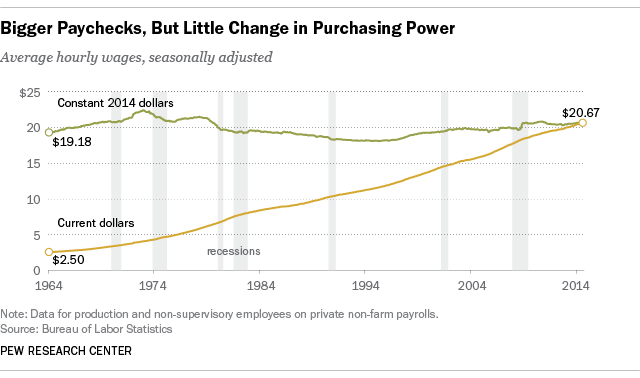
The Globe & Mail picked up a story in the New York Times titled The American Middle Class Is No Longer the World’s Richest:

While the wealthiest Americans are outpacing many of their global peers, a New York Times analysis shows that across the lower- and middle-income tiers, citizens of other advanced countries have received considerably larger raises over the last three decades.

After-tax middle-class incomes in Canada — substantially behind in 2000 — now appear to be higher than in the United States. The poor in much of Europe earn more than poor Americans.

The findings are striking because the most commonly cited economic statistics — such as per capita gross domestic product — continue to show that the United States has maintained its lead as the world’s richest large country. But those numbers are averages, which do not capture the distribution of income. With a big share of recent income gains in this country flowing to a relatively small slice of high-earning households, most Americans are not keeping pace with their counterparts around the world.

Three broad factors appear to be driving much of the weak income performance in the United States. First, educational attainment in the United States has risen far more slowly than in much of the industrialized world over the last three decades, making it harder for the American economy to maintain its share of highly skilled, well-paying jobs.

A second factor is that companies in the United States economy distribute a smaller share of their bounty to the middle class and poor than similar companies elsewhere. Top executives make substantially more money in the United States than in other wealthy countries. The minimum wage is lower. Labor unions are weaker.

Finally, governments in Canada and Western Europe take more aggressive steps to raise the take-home pay of low- and middle-income households by redistributing income.

“Things are pretty flat,” said Kathy Washburn, 59, of Mount Vernon, Iowa, who earns $33,000 at an Ace Hardware store, where she has worked for 23 years. “You have mostly lower level and high and not a lot in between. People need to start in between to work their way up.”

I’m not a social scientist and have made no detailed study of the problem. But I suggest that part of the reason is productivity, which is still impressive in the States, despite recent problems:

ObamaCare is slowing economic recovery in many ways, ranging from implicitly increasing tax rates on individuals to hindering business growth by creating incentives for small business to remain below 50 employees or to only hire part-time workers. In larger businesses and corporations, uncertainty about the future of health-care costs is holding back investment and hiring.

Statistics suggest that new banking regulation may be significantly hindering small business lending. In July 2013, the Office of Advocacy of the U.S. Small Business Administration reported that small business loans (those less than $1 million) declined about 10% between 2010 and 2012. Reforms that reverse this trend are needed.

Reform is also required to make it easier for immigrants to start businesses. About half of the most successful high-tech startups in the U.S. were either founded or cofounded by immigrants. But U.S. law restricts immigration for people with the skills to start the next Intel. The current H1-B visa program for skilled workers is capped at around 65,000 workers, and the most recent year’s application for this visa was oversubscribed within one week.

This problem is so acute that Silicon Valley-based startup incubator Blueseed plans to launch a cruise ship next year to be docked 12 miles off of San Francisco in international waters so immigrants can start businesses without needing residency. Immigration reform is the biggest free lunch facing policy makers, yet its fate remains uncertain in Washington.

and further:

What the most recent numbers regarding prices of IT equipment imply is that the efficiency gains brought by the digital revolution may be petering out, and that will have a direct effect on our ability to become more efficient workers. And if we want to get back to the worker-productivity gains we were experiencing a decade ago, we need to somehow figure out how to encourage the kind of technological innovation that has led to previous waves of sharp productivity growth.

Of course, this raises the age-old question that economists have been arguing over for generations: What causes innovation? Conservative economists tend to believe that innovation is spawned mainly by the ingenuity of entrepreneurs. They rely on what is known as Say’s law, named after the classical economist Jean-Baptiste Say, which states that “supply creates its own demand.” … In this worldview, the entrepreneur is the instigator of growth, and therefore we must do what we can to avoid dampening his incentive to create.

But the entrepreneur isn’t the only source of productivity growth. Firms can simply invest more in existing technology, intellectual property, and research and development. And it turns out that growth of this sort of spending has slowed from an average of 4.7% per year in 1980 to 2000, to 2.8% per year over the past 10 years, according to the report.

Compare this angst to Canadian angst:

For three decades, growth in Canadian labour productivity (at its simplest, output in dollars per hour worked) has lagged behind productivity growth in the United States and other major countries. A recent update of the productivity data by Statistics Canada, to the end of 2011, has revealed that the problem has gotten even worse.

If we continue to discount or dismiss the productivity issue, Canadians’ future incomes will be threatened – particularly if there is a sustained downward adjustment in the price of key natural resources. If there ever was a time to take poor productivity growth seriously, that time has arrived.

So I will hypothesize that this median-income thing is not something to celebrate: I suggest it may be a direct result of our lousy productivity. The middle class did very well in the 20th century, when productivity improvements meant spending $250,000 to buy the machinery that turned a labourer into a skilled tradesman. I suggest that in this century, productivity improvements mean spending $1,000,000 to replace that skilled tradesman with some software.

And it is productivity that makes us rich, not equality.

I read a fascinating paper recently by Marc Oliver Rieger, Mei Wang and Thorsten Hens titled International Evidence on the Equity Premium Puzzle and Time Discounting:

We examine time discounting factors in an international survey. Our analysis reveals a significant relationship between time discount factors and historical equity premiums across 27 countries. This result implies that higher historical equity risk premiums are observed in countries where survey participants tend to be more short-term oriented. This finding is consistent with the explanation of the equity premium puzzle provided by myopic loss aversion.

Our results suggest that differences in time discounting can indeed explain some of the differences in equity premiums. Admittedly, the causality can go into both directions; namely, a high equity premium can also lead to more time discounting because of the higher expected return. However, we find that the subjective discount rates measured in our survey are far higher than the equity premiums, suggesting that equity premiums may not be the main drivers of time discounting.

The excellent updated Equity Risk Premiums (ERP): Determinants, Estimation and Implications – The 2014 Edition has a very good section on equity liquidity:

The notion that market for publicly traded stocks is wide and deep has led to the argument that the net effect of illiquidity on aggregate equity risk premiums should be small. However, there are two reasons to be skeptical about this argument. The first is that not all stocks are widely traded and illiquidity can vary widely across stocks; the cost of trading a widely held, large market cap stock is very small but the cost of trading an over-the-counter stock will be much higher. The second is that the cost of illiquidity in the aggregate can vary over time, and even small variations can have significant effects on equity risk premiums. In particular, the cost of illiquidity seems to increase when economies slow down and during periods of crisis, thus exaggerating the effects of both phenomena on the equity risk premium.

While much of the empirical work on liquidity has been done on cross sectional variation across stocks (and the implications for expected returns), there have been attempts to extend the research to look at overall market risk premiums. Gibson and Mougeot (2004) look at U.S. stock returns from 1973 to 1997 and conclude that liquidity accounts for a significant component of the overall equity risk premium, and that its effect varies over time.12 Baekart, Harvey and Lundblad (2006) present evidence that the differences in equity returns (and risk premiums) across emerging markets can be partially explained by differences in liquidity across the markets.13

Canadian hedge funds aren’t winning any prizes:

Still, the poor performance relative to the TSX raises more questions about their long-term returns. Since Scotiabank created its index in 2004, hedge funds only beat the S&P/TSX composite and the S&P 500 when their returns are asset-weighted. When they are evenly-weighted, meaning they are calculated as a simple average, the returns are simply on par with the indexes.

Asset-weighted returns are a better reflection of the sector; but it’s a little surpising that equal-weighted returns aren’t better than asset weighted. There must be a fair number of clowns running small, lousy funds.

Remember the idiotic Target Benefit Plans that I mocked on October 1, 2013? Now they’re federal government policy!

The Conservative government is throwing a new idea into the heated debate over Canadian pensions, launching a national discussion over proposed new pension plans that share the investment risk between employers and employees.

Under a target benefit plan, employers and employees jointly oversee the management of a plan that aims to collect defined contributions in order to achieve a targeted benefit in retirement.

However if returns come in lower than expected, employers are not obligated to top up the fund. Instead, the fund could reduce the size of the benefits, increase the size of contributions or both.

Similarly, if investments overperform, decisions could be made to increase benefits or lower contributions.

The goal is to encourage more employers to offer pensions and to entice those offering a defined contribution plan to offer something better.

Sadly, the Globe article does not explain how a Target Benefit Plan is supposed to be better than Defined Contribution. Maybe because If the beneficiaries, who are taking all the risk, get lucky, the company benefits via lower contributions?

Thomson Reuters, proud issuer of TRI.PR.B, was confirmed at Pfd-3(high) by DBRS:

DBRS expects the earnings profile of Thomson Reuters to remain well positioned within the current rating category as the Company continues to execute its restructuring indicatives and acquire higher growth businesses. That said, DBRS expects revenues from ongoing businesses in 2014 to remain relatively flat at approximately $12.5 billion as growth across most business lines is expected to mitigate continued declines in the Financial & Risk segment. DBRS expects the trajectory of declines in Financial & Risk to continue to moderate as the economy rebounds and the Company continues to improve its product offerings. DBRS forecasts adjusted operating margins to rise from 24.5% (including severance charges) in 2013 to between 26% and 27% in 2014, due a decline in restructuring expenses year over year, further cost-cutting and a continued shift towards higher margin growth businesses. As such, DBRS expects EBITDA from ongoing businesses should rise to approximately $3.3 billion in 2014 (including $120 million of remaining severance charges). DBRS expects the Company to generate $400 million in annual cost savings by 2017 through product simplification, restructuring initiatives, and the achievement of scalable benefits.

Going forward, DBRS believes Thomson Reuters’ financial profile will remain consistent with the current rating category. DBRS expects the Company to use free cash flow and issue incremental debt for acquisitions and share repurchases such that leverage remains within its newly set financial policy guidelines (i.e., a net debt-to-EBITDA ratio of up to 2.5x).

It was a mixed day for the Canadian preferred share market, with PerpetualDiscounts off 1bp, FixedResets up 6bp and DeemedRetractibles gaining 5bp. Volatility was minimal. Volume – with the exception of the new issue – was extremely low.

HIMIPref™ Preferred Indices
These values reflect the December 2008 revision of the HIMIPref™ Indices

Values are provisional and are finalized monthly
Index Mean
Current
Yield
(at bid)
Median
YTW
Median
Average
Trading
Value
Median
Mod Dur
(YTW)
Issues Day’s Perf. Index Value
Ratchet 0.00 % 0.00 % 0 0.00 0 0.4761 % 2,418.5
FixedFloater 4.67 % 3.90 % 31,789 17.71 1 0.0491 % 3,679.9
Floater 3.02 % 3.15 % 49,640 19.35 4 0.4761 % 2,611.3
OpRet 4.35 % -4.70 % 36,126 0.11 2 0.1550 % 2,698.4
SplitShare 4.80 % 4.27 % 63,745 4.22 5 -0.0238 % 3,089.3
Interest-Bearing 0.00 % 0.00 % 0 0.00 0 0.1550 % 2,467.4
Perpetual-Premium 5.54 % -7.68 % 106,515 0.09 13 0.0000 % 2,390.5
Perpetual-Discount 5.40 % 5.38 % 110,416 14.63 23 -0.0093 % 2,495.6
FixedReset 4.67 % 3.61 % 190,473 4.32 80 0.0550 % 2,536.6
Deemed-Retractible 5.03 % -3.50 % 144,580 0.14 42 0.0517 % 2,497.3
FloatingReset 2.66 % 2.43 % 171,747 4.08 5 0.0000 % 2,481.2
Performance Highlights
Issue Index Change Notes
TRP.PR.C FixedReset 1.03 % YTW SCENARIO
Maturity Type : Limit Maturity
Maturity Date : 2044-04-23
Maturity Price : 22.25
Evaluated at bid price : 22.58
Bid-YTW : 3.69 %
Volume Highlights
Issue Index Shares
Traded
Notes
BMO.PR.S FixedReset 1,557,213 New issue settled today.
YTW SCENARIO
Maturity Type : Call
Maturity Date : 2019-05-25
Maturity Price : 25.00
Evaluated at bid price : 25.42
Bid-YTW : 3.65 %
RY.PR.Z FixedReset 60,425 Nesbitt crossed 24,000 at 25.50.
YTW SCENARIO
Maturity Type : Call
Maturity Date : 2019-05-24
Maturity Price : 25.00
Evaluated at bid price : 25.61
Bid-YTW : 3.41 %
MFC.PR.L FixedReset 42,269 RBC crossed 24,800 at 24.87.
YTW SCENARIO
Maturity Type : Hard Maturity
Maturity Date : 2025-01-31
Maturity Price : 25.00
Evaluated at bid price : 24.91
Bid-YTW : 4.02 %
BNS.PR.Z FixedReset 37,596 TD crossed 10,000 at 24.38.
YTW SCENARIO
Maturity Type : Hard Maturity
Maturity Date : 2022-01-31
Maturity Price : 25.00
Evaluated at bid price : 24.40
Bid-YTW : 3.57 %
ENB.PR.D FixedReset 28,424 Nesbitt crossed 21,500 at 24.40.
YTW SCENARIO
Maturity Type : Limit Maturity
Maturity Date : 2044-04-23
Maturity Price : 23.02
Evaluated at bid price : 24.35
Bid-YTW : 4.14 %
BAM.PR.X FixedReset 27,570 RBC crossed 21,500 at 21.66.
YTW SCENARIO
Maturity Type : Limit Maturity
Maturity Date : 2044-04-23
Maturity Price : 21.34
Evaluated at bid price : 21.65
Bid-YTW : 4.28 %
There were 16 other index-included issues trading in excess of 10,000 shares.
Wide Spread Highlights
Issue Index Quote Data and Yield Notes
CU.PR.G Perpetual-Discount Quote: 21.81 – 22.34
Spot Rate : 0.5300
Average : 0.3500

YTW SCENARIO
Maturity Type : Limit Maturity
Maturity Date : 2044-04-23
Maturity Price : 21.51
Evaluated at bid price : 21.81
Bid-YTW : 5.22 %

ENB.PR.Y FixedReset Quote: 24.01 – 24.42
Spot Rate : 0.4100
Average : 0.2662

YTW SCENARIO
Maturity Type : Limit Maturity
Maturity Date : 2044-04-23
Maturity Price : 22.76
Evaluated at bid price : 24.01
Bid-YTW : 4.20 %

TD.PR.P Deemed-Retractible Quote: 26.23 – 26.58
Spot Rate : 0.3500
Average : 0.2352

YTW SCENARIO
Maturity Type : Call
Maturity Date : 2014-05-23
Maturity Price : 25.75
Evaluated at bid price : 26.23
Bid-YTW : -17.75 %

GWO.PR.H Deemed-Retractible Quote: 23.13 – 23.47
Spot Rate : 0.3400
Average : 0.2252

YTW SCENARIO
Maturity Type : Hard Maturity
Maturity Date : 2025-01-31
Maturity Price : 25.00
Evaluated at bid price : 23.13
Bid-YTW : 5.87 %

MFC.PR.F FixedReset Quote: 23.17 – 23.47
Spot Rate : 0.3000
Average : 0.1989

YTW SCENARIO
Maturity Type : Hard Maturity
Maturity Date : 2025-01-31
Maturity Price : 25.00
Evaluated at bid price : 23.17
Bid-YTW : 4.28 %

NA.PR.L Deemed-Retractible Quote: 25.26 – 25.53
Spot Rate : 0.2700
Average : 0.1721

YTW SCENARIO
Maturity Type : Call
Maturity Date : 2014-06-14
Maturity Price : 25.00
Evaluated at bid price : 25.26
Bid-YTW : -4.43 %

Market Action

April 22, 2014

A tiny bit of sanity accidentally crept into the Basel III derivatives rules:

The Basel Committee on Banking Supervision, which set out a year ago to block banks from relying too heavily on each other, changed course last week, opting to let firms preserve most derivatives and repurchase agreements among themselves. The panel revised formulas for evaluating exposure and used a broader definition of capital. Those tweaks spare about $1 trillion in deals at seven of the biggest U.S. banks that would have exceeded proposed limits, according to a November study by the Clearing House, an industry group.

In March 2013, the Basel committee proposed a new way of calculating how much money banks stood to lose on their derivatives deals. While the panel set a ceiling for total exposure to any one party, including nonfinancial firms, at 25 percent of a bank’s capital, 29 institutions deemed systemically important faced a tighter threshold of 10 percent to 15 percent for dealings with each other.

The Clearing House, representing 21 of the largest commercial banks in North America and Europe, released estimates after Basel’s proposal, showing how much seven of the largest banks would collectively exceed exposure limits. The study included scenarios showing the rule’s impact if changes were made to satisfy different objections.

The Basel committee’s most significant changes to the proposed methodology last week affected how derivatives and repo exposures are calculated. It picked 15 percent as the limit for systemic banks instead of 10 percent. The panel also chose Tier 1 capital, which includes preferred securities, instead of only common equity as the base for calculating the exposure ratio.

On the derivatives side, the proposed methodology would have forced banks to report a sixfold increase in the risks they calculate under their internal models, the Clearing House estimated. The final rule only doubles those figures.

The committee also modified a proposal that would have forced banks to add in their exposure to the issuer of a bond used as collateral in a derivatives trade. If a bank buys a credit-default swap from a hedge fund that posts Italian sovereign bonds as collateral, the bank would be exposed both to the Italian government and the fund. That requirement was eliminated in the final rule unless the collateral is issued by another bank or financial institution.

Well, that last bit is just wrong; if a hedge fund posts Italian sovereigns as collateral, the sovereign exposure only kicks in if the hedge fund defaults. Now, there is certainly an amount of correlation between the two – the hedge fund could be taken down by its Italian exposure – that that correlation is certainly less than 100%.

There’s more news about NY Attorney-General Schneiderman’s crusade against the 21st century – he’s upset with AirBnB:

In an effort to jam the wheels of Airbnb’s juggernaut, Mr. Schneiderman subpoenaed the company in October to hand over data concerning some 15,000 New Yorkers who have advertised rooms on the website’s booking service. The attorney-general isn’t, apparently, chasing legitimate householders offering up a spare room, but those who are violating state laws by renting out multiple rooms in the manner of a hotel or even a brothel.

Or even a Satanic slaughterhouse run by pedophiles, eh, Schneiderman? It’s all for the public good, all for consumer protection … right? Wrong. It’s all box-ticking:

Nearly two-thirds of New York city apartments recently listed on Airbnb were illegal sublets, according to an affidavit from the state Attorney General’s office, the newspaper said.

The affidavit, which is expected to be filed in court on Monday by the AG’s office, shows 64 percent of Airbnb’s 19,500-plus offerings for January 31 cover an “entire apartment,” the NY Post said. (r.reuters.com/sun68v)

More than 200 of the offerings came from just five “hosts,” suggesting third parties were renting out pads on behalf of their owners, the newspaper said.

Schneiderman opened an investigation last year into whether hosts on Airbnb, a Silicon Valley venture capital-backed website that lets people put up spare rooms or couches for rent, are breaking a 2010 law that prohibits renters from subletting their room for less than 30 days.

I often point out that the whole HFT kerfuffle is due to the old-boys having their lunch eaten by the geeky outsiders; I should point out that it is not just the old-boys who prefer to compete by regulation. Very often, it is the new kids on the block who prefer to compete on grounds other than price and performance:

But let me tell you, trailing commissions make previous battles look like minor skirmishes. The industry has drawn a line in the sand and brought out the heavy artillery. With few exceptions, the fund companies, dealers and banks have formed a united front and nobody is stepping out of line. The message is clear – banning embedded commissions will destroy the industry and make it difficult for small investors to get advice. The status quo should be maintained. In other words, “Just let us charge most of our clients too much (unknowingly) so we can subsidize the small clients (thank you, thank you, thank you).”

Yeah, yeah. Your business practices are the only moral ones – in fact, they define morality – and competition should be illegal. Next!

I recently became aware of a piece by Larry Swedroe titled Why you should avoid preferred stocks. It’s not very interesting – the usual qualitative bad points are compared to the usual qualitative good points, and a quantitative decision appears by magic – but it did have one interesting feature:

Of even greater concern is that a five-factor regression shows that not only do preferred shares have significant exposure to equity risk (0.42 loading on the market factor) and significant exposure to value stocks (0.43 loading), but much greater exposure to default risk than high-yield bonds. The loading on default for preferred stocks was 1.5, as compared to the default loading for 1-10 year high-yield bonds of 0.54 and for 10-30 year high-yield bonds of 0.77. (All the figures are statistically significant.) In other words, preferred stocks had about three times the exposure to default risk as 1-10 year high-yield bonds and about twice that of 10-30 year high-yield bonds.

A five-factor regression? Interesting. Mr. Google finds a reference to a paper by Eugene F. Fama and Kenneth R. French titled Common risk factors in the returns on stocks and bonds:

For corporate bonds. shifts in economic conditions that change the likelihood
of default give rise to another common factor in returns. Our proxy for this default factor, DEF, is the difference between the return on a market portfolio of long-term corporate bonds (the Composite portfolio on the corporate bond module of Ibbotson Associates) and the long-term government bond return.

So right away, I’m suspicious. Although comparing returns on long-term corporates vs. long-term governments is reasonable enough in terms of return analysis, it is not particularly focussed on default risk; spreads between the two in terms of yield – and hence on returns, when looking backward – are more of a liquidity indicator than a default-risk indicator.

The factors were used in a piece by James L. Davis of Dimensional Fund Advisors titled Investment Characteristics of Preferred Stock to decompose returns in the American market as:

FiveFactor
Click for Big

So – assuming this was Mr. Swedroe’s source – one declared result is that preferred stock returns are relatively uncorrelated with the five magic factors. A lack of correlation is supposed to be good in Modern Portfolio Theory, isn’t it?

It’s an interesting approach and I’ll think about it, but the problem with this kind of ‘Look-Mummy-I-Gotta-Spreadsheet’ investment analysis is that correlations are extremely dependent upon the time period chosen and the sampling frequency. Not only is any given sample period not necessarily representative of any future sample period – which is a standard criticism of virtually any quantitative work – but there is not a jot of evidence presented that these factors are stable even when subjected to small changes in period. I’ll think about this … it might be worth an article.

It was a good day for the Canadian preferred share market, with PerpetualDiscounts winning 19bp, FixedResets up 9bp and DeemedRetractibles gaining 6bp. Volatility was non-existent, even technically, for the second day running, which might even be a record. Volume was extremely low.

HIMIPref™ Preferred Indices
These values reflect the December 2008 revision of the HIMIPref™ Indices

Values are provisional and are finalized monthly
Index Mean
Current
Yield
(at bid)
Median
YTW
Median
Average
Trading
Value
Median
Mod Dur
(YTW)
Issues Day’s Perf. Index Value
Ratchet 0.00 % 0.00 % 0 0.00 0 0.3341 % 2,407.1
FixedFloater 4.67 % 3.90 % 32,927 17.71 1 0.4938 % 3,678.1
Floater 3.03 % 3.16 % 49,836 19.32 4 0.3341 % 2,599.0
OpRet 4.36 % -3.90 % 37,618 0.11 2 0.0582 % 2,694.2
SplitShare 4.80 % 4.29 % 63,509 4.22 5 0.0715 % 3,090.1
Interest-Bearing 0.00 % 0.00 % 0 0.00 0 0.0582 % 2,463.6
Perpetual-Premium 5.54 % -6.77 % 107,295 0.09 13 0.1559 % 2,390.5
Perpetual-Discount 5.40 % 5.35 % 110,594 14.62 23 0.1923 % 2,495.8
FixedReset 4.68 % 3.61 % 191,760 4.17 79 0.0913 % 2,535.2
Deemed-Retractible 5.03 % -0.78 % 146,637 0.15 42 0.0556 % 2,496.0
FloatingReset 2.66 % 2.45 % 174,323 4.24 5 -0.0159 % 2,481.2
Performance Highlights
Issue Index Change Notes
No individual gains or losses exceeding 1%!
Volume Highlights
Issue Index Shares
Traded
Notes
RY.PR.Z FixedReset 166,615 National bought 10,000 from TD at 25.54. RBC crossed blocks of 50,000 and 49,200, both at 25.54. Scotia crossed 10,900 at 25.54.
YTW SCENARIO
Maturity Type : Call
Maturity Date : 2019-05-24
Maturity Price : 25.00
Evaluated at bid price : 25.52
Bid-YTW : 3.49 %
TD.PR.E FixedReset 33,452 Called for redemption.
YTW SCENARIO
Maturity Type : Call
Maturity Date : 2014-05-30
Maturity Price : 25.00
Evaluated at bid price : 24.99
Bid-YTW : 5.38 %
BNS.PR.Z FixedReset 19,904 YTW SCENARIO
Maturity Type : Hard Maturity
Maturity Date : 2022-01-31
Maturity Price : 25.00
Evaluated at bid price : 24.34
Bid-YTW : 3.61 %
RY.PR.F Deemed-Retractible 19,215 YTW SCENARIO
Maturity Type : Call
Maturity Date : 2014-05-24
Maturity Price : 25.50
Evaluated at bid price : 25.69
Bid-YTW : -8.30 %
RY.PR.I FixedReset 17,089 TD crossed 10,000 at 25.58.
YTW SCENARIO
Maturity Type : Call
Maturity Date : 2019-02-24
Maturity Price : 25.00
Evaluated at bid price : 25.52
Bid-YTW : 3.00 %
BAM.PR.M Perpetual-Discount 17,015 Nesbitt crossed 14,300 at 20.80.
YTW SCENARIO
Maturity Type : Limit Maturity
Maturity Date : 2044-04-22
Maturity Price : 20.81
Evaluated at bid price : 20.81
Bid-YTW : 5.77 %
There were 16 other index-included issues trading in excess of 10,000 shares.
Wide Spread Highlights
Issue Index Quote Data and Yield Notes
IFC.PR.A FixedReset Quote: 24.06 – 24.48
Spot Rate : 0.4200
Average : 0.2723

YTW SCENARIO
Maturity Type : Hard Maturity
Maturity Date : 2025-01-31
Maturity Price : 25.00
Evaluated at bid price : 24.06
Bid-YTW : 4.20 %

RY.PR.C Deemed-Retractible Quote: 25.51 – 25.78
Spot Rate : 0.2700
Average : 0.1641

YTW SCENARIO
Maturity Type : Call
Maturity Date : 2014-05-22
Maturity Price : 25.50
Evaluated at bid price : 25.51
Bid-YTW : -0.78 %

GWO.PR.N FixedReset Quote: 22.33 – 22.65
Spot Rate : 0.3200
Average : 0.2435

YTW SCENARIO
Maturity Type : Hard Maturity
Maturity Date : 2025-01-31
Maturity Price : 25.00
Evaluated at bid price : 22.33
Bid-YTW : 4.41 %

TRP.PR.C FixedReset Quote: 22.35 – 22.67
Spot Rate : 0.3200
Average : 0.2448

YTW SCENARIO
Maturity Type : Limit Maturity
Maturity Date : 2044-04-22
Maturity Price : 21.83
Evaluated at bid price : 22.35
Bid-YTW : 3.71 %

HSE.PR.A FixedReset Quote: 22.90 – 23.09
Spot Rate : 0.1900
Average : 0.1253

YTW SCENARIO
Maturity Type : Limit Maturity
Maturity Date : 2044-04-22
Maturity Price : 22.57
Evaluated at bid price : 22.90
Bid-YTW : 3.87 %

IAG.PR.A Deemed-Retractible Quote: 22.43 – 22.70
Spot Rate : 0.2700
Average : 0.2090

YTW SCENARIO
Maturity Type : Hard Maturity
Maturity Date : 2025-01-31
Maturity Price : 25.00
Evaluated at bid price : 22.43
Bid-YTW : 5.97 %

Market Action

April 21, 2014

Felix Salmon writes a good piece on Michael Lewis’s flawed new book (Flash Boys) [emphasis added]:

And he also mentions that while you used to be able to drive a truck through the bid-offer prices on stocks, pre-decimalization, nowadays prices are much, much tighter — with the result that trading is much, much less expensive than it used to be. Given all that, it stands to reason that even if the HFT shops are making good money, they’re still making less than the big broker-dealers used to make back in the day. But that’s not a calculation Lewis seems to have any interest in.

In his introduction to the book, Lewis writes this:

The average investor has no hope of knowing, of course, even the little he needs to know. He logs onto his TD Ameritrade or E*Trade or Schwab account, enters a ticker symbol of some stock, and clicks an icon that says “Buy”: Then what? He may think he knows what happens after he presses the key on his computer keyboard, but, trust me, he does not. If he did, he’d think twice before he pressed it.

This is silly. I’ll tell you what happens when the little guy presses that key: his order doesn’t go anywhere near any stock exchange, and no HFT shop is going to front-run it. Instead, he will receive exactly the number of shares he ordered, at exactly the best price in the market at the second he pressed the button, and he will do so in less time than it takes his web browser to refresh. Buying a small number of shares through an online brokerage account is the best guarantee of not getting front-run by HFT types. And there’s no reason whatsoever for the little guy to think twice before pressing the button.

And that emphasis, boys and girls, is the reason why there’s such a big fuss about High Frequency Trading. But don’t forget the lawsuits!

The stuff the complaint complains about, by the way, is mostly just what’s in “Flash Boys.” Basically it’s that high-speed traders trade faster than low-speed traders, via latency arbitrage or moving in reaction to orders in the market or co-location or direct data feeds or … there’s some weird stuff here, like an accusation that high-frequency traders trade in advance of index-fund rebalancing, which is just intelligently making use of public information but which these lawyers find objectionable.[Footnote]

[Footnote reads]:Like:

Most retirement savings, such as public and private pension funds or 401(k) and individual retirement accounts in the United States, are invested in mutual funds, the most popular of which are index funds which periodically “rebalance” or adjust their portfolio to account for current prices and market capitalization of the underlying securities in the stock or other index that they track. This allows trading algorithms to anticipate and trade ahead of stock price movements caused by mutual fund rebalancing, making a profit on advance knowledge of the large institutional block orders. This results in profits being transferred from investors to algorithmic traders, estimated to be at least 21 to 28 basis points annually for S&P 500 index funds, and at least 38 to 77 basis points per year for Russell 2000 funds.

I do not get it. Index rebalancing is public information. If you have a computer that does the math and calculates that people will be buying a lot of stock on an index add, and you buy some of that stock to profit from that calculation — what is illegal or fraudulent or whatever about that? This is not in the book, by the way; they came up with this on their own.

The old guard’s next line of attack might be best execution in a rebate environment:

Brokers entrusted with orders in the U.S. stock market can choose from dozens of exchanges and private venues. Some money managers such as T. Rowe Price Group Inc. (TROW) have told regulators that incentives offered by exchanges for attracting orders can put a broker’s financial interest at odds with the customer’s.

Brokers can face a conflict of interest as they select where to send customer orders. Brokers can either capture a rebate or pay a fee to an exchange depending on the type of order used, while private venues known as dark pools charge lower fees but don’t have to disclose how they treat customers.

While improved disclosure is helpful, the SEC should experiment with altering the economic incentives that affect how orders are handled, [T. Rowe Price head of equity trading Andy] Brooks said. T. Rowe has joined the New York Stock Exchange, Royal Bank of Canada and IEX Group Inc. in lobbying regulators to ban the “maker-taker” system, which pays rebates to large brokers to attract trades.

Brokerages often put their own self-interest in front of their clients’ under maker-taker, according to a study by Robert Battalio and Shane Corwin of the University of Notre Dame and Robert Jennings of Indiana University.

The linked study is titled Can Brokers Have It All? On the Relation between Make Take Fees & Limit Order Execution Quality:

We identify retail brokers that seemingly route orders to maximize order flow payments: selling market orders and routing limit orders to venues paying large liquidity rebates. Because venues offering high rebates also charge liquidity demanding investors high fees, fee structure may affect the arrival rate of marketable orders. If limit orders on low-fee venues fill when similarly priced orders on high-fee venues do not, routing orders to maximize rebates might not always be in customers’ best interests. Using proprietary limit order data, we document a negative relation between several measures of limit order execution quality and the relative fee level. Specifically, we show that when ‘identical’ limit orders are concurrently displayed on two venues, orders routed to the low-fee venue execute more frequently and suffer lower adverse selection. Using the NYSE’s TAQ data, we show that the negative relation between take fees and execution quality extends beyond our proprietary dataset.

The big problem in Europe is deflation:

Inflation in Europe has been in decline since late 2011, thanks to gruesome unemployment, excess manufacturing capacity, the weak recovery, falling energy prices and the rising euro. At last count, it was running at 0.5 per cent, well below the ECB’s [European Central Bank’s] target rate of slightly under 2 per cent. The question is whether 0.5 per cent is the bottom or close to it. The International Monetary Fund says that Greece alone will post a slightly negative inflation rate in 2014 and most economists forecast inflation at 0.9 per cent to 1.5 per cent for the euro zone his year, rising marginally next year.

The figures don’t suggest deflation is coming. Yet the ECB in its last governing council meeting signalled it was ready to haul out the heavy artillery. Besides another interest rate cut, the options include quantitative easing, in which the ECB would make large-scale purchase of government and private debt (more likely the former) to boost money supply, or charge banks a fee to park their funds at the ECB.

As soon as [ECB honcho] Mr. Draghi said the ECB was ready to launch son of “whatever it takes,” bond yields fell in the expectation that the ECB is about to buy every bond in sight. In the past month, the yields of Portugal’s 10-year dropped 0.7 of a percentage point, to 3.7 per cent, which is only one point higher than U.S. Treasury yields. Remember, this was a country on the verge of bankruptcy not long ago. Italy’s yields have slumped to 3.1 per cent. They were double that level, or higher, two or three years ago. Greece’s yields fell so far so fast – they’re now below 6 per cent – that the country considered the prime candidate to bolt from the euro zone in 2012 is back in the debt markets. Last week, it couldn’t keep up with demand for its new five-year bonds.

It’s always interesting to read how the competition is doing:

Merrill Lynch & Co. Inc. is dangling a new incentive in front of its brokers by creating a “recognition club” for those who bring in $8-million (U.S.) or more a year from clients, more than doubling the top goals set by its securities industry rivals.

The new “Pinnacle Club” will pay its members $10,000 in cash and additional benefits if they produce $8-million of revenue or build up five million of production credits.

Club membership also gives members bragging rights as elite brokers, the ability to advertise their status on their websites, and priority when accounts of departing brokers are redistributed or when customers are referred to the broker-dealer from other parts of Bank of America, according to a description of the recognition clubs in Merrill’s 2014 compensation booklet.

Brokers who qualify for Pinnacle as well as for Merrill’s seven lower-tier recognition clubs also can participate with their significant others in “Top Advisor Summits” that are usually held over several days in resort areas.

In reporting first-quarter earnings last week, Merrill said its 13,725 brokers were on target to produce an average of $1.06-million each this year, one of the highest averages in the brokerage industry. The average is skewed, however, by heavy hitters who could qualify for the new club. Fewer than 5,200 of its advisers had $1-million or more of production in 2013.

Treasuries are, on the whole, doing better than the Street expected:

One reason yields have fallen is the U.S. labor market, which has yet to show consistent improvement.

The world’s largest economy added fewer jobs on average in the first three months of the year than in the same period in the prior two years, data compiled by Bloomberg show. At the same time, a slowdown in China and tensions between Russia and Ukraine boosted demand for the safest assets.

Wall Street firms known as primary dealers are getting caught short betting against Treasuries.

They collectively amassed $5.2 billion of wagers in March that would profit if Treasuries fell, the first time they had net short positions on government debt since September 2011, data compiled by the Fed show.

It was a mixed day for the Canadian preferred share market, with PerpetualDiscounts and FixedResets both gaining 9bp, while DeemedRetractibles were off 2bp. Volatility was not even technically existent. Volume was very low.

HIMIPref™ Preferred Indices
These values reflect the December 2008 revision of the HIMIPref™ Indices

Values are provisional and are finalized monthly
Index Mean
Current
Yield
(at bid)
Median
YTW
Median
Average
Trading
Value
Median
Mod Dur
(YTW)
Issues Day’s Perf. Index Value
Ratchet 0.00 % 0.00 % 0 0.00 0 -0.3455 % 2,399.0
FixedFloater 4.69 % 4.24 % 33,145 17.96 1 0.0989 % 3,660.0
Floater 3.03 % 3.17 % 50,576 19.31 4 -0.3455 % 2,590.3
OpRet 4.36 % -4.48 % 39,066 0.11 2 -0.0194 % 2,692.6
SplitShare 4.81 % 4.33 % 62,120 4.23 5 0.1352 % 3,087.8
Interest-Bearing 0.00 % 0.00 % 0 0.00 0 -0.0194 % 2,462.1
Perpetual-Premium 5.54 % -6.95 % 108,684 0.09 13 0.0786 % 2,386.8
Perpetual-Discount 5.41 % 5.35 % 111,987 14.67 23 0.0934 % 2,491.0
FixedReset 4.68 % 3.69 % 194,754 4.33 79 0.0857 % 2,532.9
Deemed-Retractible 5.02 % -0.57 % 144,681 0.15 42 -0.0239 % 2,494.6
FloatingReset 2.66 % 2.44 % 180,893 4.25 5 -0.0080 % 2,481.6
Performance Highlights
Issue Index Change Notes
No individual gains or losses exceeding 1%!
Volume Highlights
Issue Index Shares
Traded
Notes
BNS.PR.X FixedReset 181,639 TD crossed 75,000 at 25.00; Scotia crossed 104,600 at 24.99.
YTW SCENARIO
Maturity Type : Call
Maturity Date : 2014-05-25
Maturity Price : 25.00
Evaluated at bid price : 24.99
Bid-YTW : 5.08 %
BAM.PF.E FixedReset 65,025 RBC crossed 49,800 at 25.05.
YTW SCENARIO
Maturity Type : Limit Maturity
Maturity Date : 2044-04-21
Maturity Price : 23.11
Evaluated at bid price : 25.01
Bid-YTW : 4.22 %
ENB.PR.Y FixedReset 57,412 Scotia crossed blocks of 35,000 and 15,000, both at 23.99.
YTW SCENARIO
Maturity Type : Limit Maturity
Maturity Date : 2044-04-21
Maturity Price : 22.70
Evaluated at bid price : 23.87
Bid-YTW : 4.23 %
BNS.PR.R FixedReset 45,751 Nesbitt crossed 40,000 at 25.68.
YTW SCENARIO
Maturity Type : Call
Maturity Date : 2019-01-26
Maturity Price : 25.00
Evaluated at bid price : 25.63
Bid-YTW : 3.25 %
FTS.PR.E OpRet 41,530 TD crossed 41,500 at 25.95.
YTW SCENARIO
Maturity Type : Call
Maturity Date : 2014-06-01
Maturity Price : 25.50
Evaluated at bid price : 25.94
Bid-YTW : -4.48 %
TRP.PR.E FixedReset 33,950 Nesbitt crossed 25,000 at 25.40.
YTW SCENARIO
Maturity Type : Limit Maturity
Maturity Date : 2044-04-21
Maturity Price : 23.24
Evaluated at bid price : 25.34
Bid-YTW : 3.92 %
There were 19 other index-included issues trading in excess of 10,000 shares.
Wide Spread Highlights
Issue Index Quote Data and Yield Notes
FTS.PR.F Perpetual-Discount Quote: 24.39 – 24.86
Spot Rate : 0.4700
Average : 0.2698

YTW SCENARIO
Maturity Type : Limit Maturity
Maturity Date : 2044-04-21
Maturity Price : 24.09
Evaluated at bid price : 24.39
Bid-YTW : 5.08 %

POW.PR.A Perpetual-Discount Quote: 25.11 – 25.48
Spot Rate : 0.3700
Average : 0.2584

YTW SCENARIO
Maturity Type : Call
Maturity Date : 2014-05-21
Maturity Price : 25.00
Evaluated at bid price : 25.11
Bid-YTW : 1.36 %

PWF.PR.H Perpetual-Premium Quote: 25.30 – 25.50
Spot Rate : 0.2000
Average : 0.1327

YTW SCENARIO
Maturity Type : Call
Maturity Date : 2014-05-21
Maturity Price : 25.00
Evaluated at bid price : 25.30
Bid-YTW : -10.24 %

ENB.PR.A Perpetual-Premium Quote: 25.40 – 25.64
Spot Rate : 0.2400
Average : 0.1758

YTW SCENARIO
Maturity Type : Call
Maturity Date : 2014-05-21
Maturity Price : 25.00
Evaluated at bid price : 25.40
Bid-YTW : -4.52 %

ENB.PF.A FixedReset Quote: 25.23 – 25.39
Spot Rate : 0.1600
Average : 0.1047

YTW SCENARIO
Maturity Type : Limit Maturity
Maturity Date : 2044-04-21
Maturity Price : 23.20
Evaluated at bid price : 25.23
Bid-YTW : 4.25 %

BNS.PR.R FixedReset Quote: 25.63 – 25.84
Spot Rate : 0.2100
Average : 0.1575

YTW SCENARIO
Maturity Type : Call
Maturity Date : 2019-01-26
Maturity Price : 25.00
Evaluated at bid price : 25.63
Bid-YTW : 3.25 %

Market Action

April 17, 2014

The Globe ran a piece on an upcoming insurance pow-wow in Toronto:

“The irony of the way insurance works, as opposed to the way banking works, is that it’s not always clear that capital is the relevant solution,” he said. “It’s often not, because insurance companies get into trouble in different ways.”

For example, insurance companies wouldn’t experience a ‘run’ on deposits, Mr. McGavick said, when reserves may not be able to cover mass customer withdrawals in the same way a bank would.

This seems like an odd remark to me, because while bank runs may be rooted in capital problems, they are made possible by liquidity problems – this is the old illiquid vs. insolvent distinction that I frequently mentioned during the Credit Crunch and which is well illustrated by the Panic of 1907.

Anyway, the Geneva Association produced an analysis titled Variable Annuities — An Analysis of Financial Stability, which references (among other things):

Key Financial Stability Issues in Insurance, released in July 2010, comprises analytical work carried out on specific issues that had been raised by regulatory and supervisory counterparts in areas such as investment management, liquidity management, limits of insurability, crisis resolution mechanisms in insurance and the confused concept of an “insurance run” (supposedly akin to a bank run).

and Key Financial Stability Issues in Insurance, which is quite interesting, but which the dorks have copy-protected so I can’t copy-paste the good parts.

Capital is virtually irrelevant during a bank run (although loss of capital might trigger the run); capital is actually more important in the insurance game. While it is quite true that Segregated Fund owners can’t take their money and run – eliminating much of the need for liquidity – a lack of capital will have severe effects on the viability of the operation – as Manulife very nearly found out during the crisis.

DGS.PR.A was confirmed at Pfd-3 by DBRS:

The net asset value (NAV) of the Company has increased steadily since the last rating confirmation in April 2013. As of April 3, 2014, the downside protection available to the Preferred Shares is approximately 46.9% and the dividend coverage ratio is approximately 1.1 times. The Pfd-3 rating of the Preferred Shares is based primarily on the downside protection available and the additional protection provided by an asset coverage test, which does not permit any distributions to holders of the Class A Shares if the NAV of the Company falls below $15.

It was a good day for the Canadian preferred share market, with PerpetualDiscounts winning 16bp, FixedResets gaining 3bp and DeemedRetractibles up 13bp. Volatility was minimal. Volume … was peculiar. Very little breadth, but quite a lot of depth! A very high proportion of the volume leaders have been called for redemption.

HIMIPref™ Preferred Indices
These values reflect the December 2008 revision of the HIMIPref™ Indices

Values are provisional and are finalized monthly
Index Mean
Current
Yield
(at bid)
Median
YTW
Median
Average
Trading
Value
Median
Mod Dur
(YTW)
Issues Day’s Perf. Index Value
Ratchet 0.00 % 0.00 % 0 0.00 0 0.1875 % 2,407.4
FixedFloater 4.70 % 4.24 % 32,743 17.96 1 -0.2465 % 3,656.4
Floater 3.02 % 3.15 % 50,422 19.38 4 0.1875 % 2,599.3
OpRet 4.36 % -4.39 % 36,175 0.12 2 -0.0388 % 2,693.2
SplitShare 4.81 % 4.38 % 60,411 4.24 5 -0.1112 % 3,083.7
Interest-Bearing 0.00 % 0.00 % 0 0.00 0 -0.0388 % 2,462.6
Perpetual-Premium 5.55 % -6.02 % 107,298 0.09 13 0.0272 % 2,384.9
Perpetual-Discount 5.41 % 5.39 % 115,531 14.65 23 0.1591 % 2,488.7
FixedReset 4.68 % 3.64 % 195,270 4.34 79 0.0347 % 2,530.7
Deemed-Retractible 5.02 % -0.54 % 146,596 0.16 42 0.1331 % 2,495.2
FloatingReset 2.64 % 2.41 % 182,485 4.26 5 0.0159 % 2,481.7
Performance Highlights
Issue Index Change Notes
MFC.PR.F FixedReset 1.23 % YTW SCENARIO
Maturity Type : Hard Maturity
Maturity Date : 2025-01-31
Maturity Price : 25.00
Evaluated at bid price : 23.10
Bid-YTW : 4.25 %
Volume Highlights
Issue Index Shares
Traded
Notes
TD.PR.G FixedReset 338,738 Called for Redemption.
YTW SCENARIO
Maturity Type : Call
Maturity Date : 2014-05-30
Maturity Price : 25.00
Evaluated at bid price : 24.97
Bid-YTW : 5.44 %
BNS.PR.T FixedReset 315,839 Called for redemption.
YTW SCENARIO
Maturity Type : Call
Maturity Date : 2014-05-25
Maturity Price : 25.00
Evaluated at bid price : 24.98
Bid-YTW : 4.93 %
CM.PR.L FixedReset 244,798 Called for redemption.
YTW SCENARIO
Maturity Type : Call
Maturity Date : 2014-05-30
Maturity Price : 25.00
Evaluated at bid price : 24.98
Bid-YTW : 5.27 %
TRP.PR.E FixedReset 223,516 Desjardins crossed blocks of 23,900 and 50,800, both at 25.42. TD crossed 40,000 and RBC crossed 100,000, all at the same price.
YTW SCENARIO
Maturity Type : Limit Maturity
Maturity Date : 2044-04-17
Maturity Price : 23.26
Evaluated at bid price : 25.41
Bid-YTW : 3.86 %
ENB.PF.A FixedReset 182,613 Nesbitt crossed 30,00 at 25.37. TD bought 25,000 from anonymous and crossed blocks of 77,000 and 13,500, all at the same price.
YTW SCENARIO
Maturity Type : Limit Maturity
Maturity Date : 2044-04-17
Maturity Price : 23.24
Evaluated at bid price : 25.36
Bid-YTW : 4.18 %
FTS.PR.E OpRet 177,950 Nesbitt crossed 175,000 at 25.95.
YTW SCENARIO
Maturity Type : Call
Maturity Date : 2014-06-01
Maturity Price : 25.50
Evaluated at bid price : 25.95
Bid-YTW : -4.39 %
NA.PR.S FixedReset 172,080 RBC crossed blocks of 100,000 and 30,000, both at 25.43. TD crossed 40,000 at the same price.
YTW SCENARIO
Maturity Type : Call
Maturity Date : 2019-05-15
Maturity Price : 25.00
Evaluated at bid price : 25.43
Bid-YTW : 3.67 %
TD.PR.E FixedReset 155,319 Called for redemption.
YTW SCENARIO
Maturity Type : Call
Maturity Date : 2014-05-30
Maturity Price : 25.00
Evaluated at bid price : 24.98
Bid-YTW : 5.09 %
MFC.PR.L FixedReset 142,354 RBC crossed 120,900 at 24.85.
YTW SCENARIO
Maturity Type : Hard Maturity
Maturity Date : 2025-01-31
Maturity Price : 25.00
Evaluated at bid price : 24.85
Bid-YTW : 4.01 %
RY.PR.I FixedReset 114,223 Scotia crossed 50,000 at 25.60. RBC crossed 50,000 at the same price.
YTW SCENARIO
Maturity Type : Call
Maturity Date : 2019-02-24
Maturity Price : 25.00
Evaluated at bid price : 25.60
Bid-YTW : 3.11 %
VNR.PR.A FixedReset 111,594 RBC crossed 100,500 at 25.37; Scotia crossed 10,000 at the same price.
YTW SCENARIO
Maturity Type : Call
Maturity Date : 2017-10-15
Maturity Price : 25.00
Evaluated at bid price : 25.36
Bid-YTW : 3.93 %
ELF.PR.H Perpetual-Discount 102,208 RBC crossed 100,000 at 24.50.
YTW SCENARIO
Maturity Type : Limit Maturity
Maturity Date : 2044-04-17
Maturity Price : 24.01
Evaluated at bid price : 24.41
Bid-YTW : 5.65 %
There were 17 other index-included issues trading in excess of 10,000 shares.
Wide Spread Highlights
Issue Index Quote Data and Yield Notes
CIU.PR.C FixedReset Quote: 20.82 – 21.32
Spot Rate : 0.5000
Average : 0.3521

YTW SCENARIO
Maturity Type : Limit Maturity
Maturity Date : 2044-04-17
Maturity Price : 20.82
Evaluated at bid price : 20.82
Bid-YTW : 3.76 %

POW.PR.B Perpetual-Discount Quote: 24.32 – 24.67
Spot Rate : 0.3500
Average : 0.2323

YTW SCENARIO
Maturity Type : Limit Maturity
Maturity Date : 2044-04-17
Maturity Price : 24.06
Evaluated at bid price : 24.32
Bid-YTW : 5.53 %

PWF.PR.P FixedReset Quote: 23.89 – 24.22
Spot Rate : 0.3300
Average : 0.2261

YTW SCENARIO
Maturity Type : Limit Maturity
Maturity Date : 2044-04-17
Maturity Price : 23.53
Evaluated at bid price : 23.89
Bid-YTW : 3.50 %

CGI.PR.D SplitShare Quote: 24.77 – 25.08
Spot Rate : 0.3100
Average : 0.2096

YTW SCENARIO
Maturity Type : Soft Maturity
Maturity Date : 2023-06-14
Maturity Price : 25.00
Evaluated at bid price : 24.77
Bid-YTW : 3.93 %

ENB.PR.H FixedReset Quote: 23.64 – 23.97
Spot Rate : 0.3300
Average : 0.2445

YTW SCENARIO
Maturity Type : Limit Maturity
Maturity Date : 2044-04-17
Maturity Price : 22.65
Evaluated at bid price : 23.64
Bid-YTW : 4.02 %

POW.PR.D Perpetual-Discount Quote: 23.27 – 23.58
Spot Rate : 0.3100
Average : 0.2320

YTW SCENARIO
Maturity Type : Limit Maturity
Maturity Date : 2044-04-17
Maturity Price : 23.01
Evaluated at bid price : 23.27
Bid-YTW : 5.39 %

Market Action

April 16, 2014

The BoC kept the overnight rate low, with a fairly gloomy outlook:

Inflation in Canada remains low. Core inflation is expected to stay well below 2 per cent this year due to the effects of economic slack and heightened retail competition, and these effects will persist until early 2016. However, higher consumer energy prices and the lower Canadian dollar will exert temporary upward pressure on total CPI inflation, pushing it closer to the 2 per cent target in the coming quarters. We expect total CPI inflation will remain close to target throughout the projection, even as upward pressure from energy prices dissipates, because the impact of retail competition will gradually fade and excess capacity will be absorbed.

The Bank continues to expect Canada’s real GDP growth to average about 2 1/2 per cent in 2014 and 2015 before easing to around the 2 per cent growth rate of the economy’s potential in 2016. Competitiveness challenges continue to weigh on Canadian exporters’ ability to benefit from stronger growth abroad. However, a range of export subsectors have been growing in line with fundamentals, which suggests that as the U.S. recovery gathers momentum and becomes more broadly-based, many of our exports will benefit. The lower Canadian dollar should provide additional support. We continue to believe that rising global demand for Canadian goods and services, combined with the assumed high level of oil prices, will stimulate business investment in Canada and shift the economy to a more sustainable growth track.

In sum, the Bank continues to see a gradual strengthening in the fundamental drivers of growth and inflation in Canada. This view hinges critically on the projected upturn in exports and investment. With underlying inflation expected to remain below target for some time, the downside risks to inflation remain important. At the same time, the risks associated with household imbalances remain elevated. The Bank judges that the balance of these risks remains within the zone for which the current stance of monetary policy is appropriate and therefore has decided to maintain the target for the overnight rate at 1 per cent. The timing and direction of the next change to the policy rate will depend on how new information influences the balance of risks.

… so the loony got knocked:

The Canadian dollar touched the lowest level in more than a week after the Bank of Canada said its next move on interest rates could be up or down as a forecast pickup in business investment has been slow to materialize.

I saw some husked corn for sale at my favourite greengrocer today; but was told that it was from the US so it will be all dried out. Geez, we can get Chilean apples; why can’t we get Brazilian corn?

It was a good day for the Canadian preferred share market, with PerpetualDiscounts winning 11bp, FixedResets gaining 1bp and DeemedRetractibles up 8bp. Brookfield’s floaters got whacked – probably on the BoC announcement – but otherwise volatility was minimal. Volume was low; all the highlights are FixedResets.

HIMIPref™ Preferred Indices
These values reflect the December 2008 revision of the HIMIPref™ Indices

Values are provisional and are finalized monthly
Index Mean
Current
Yield
(at bid)
Median
YTW
Median
Average
Trading
Value
Median
Mod Dur
(YTW)
Issues Day’s Perf. Index Value
Ratchet 0.00 % 0.00 % 0 0.00 0 -1.1125 % 2,402.9
FixedFloater 4.68 % 4.23 % 34,104 17.98 1 0.6951 % 3,665.4
Floater 3.03 % 3.15 % 51,027 19.37 4 -1.1125 % 2,594.4
OpRet 4.36 % -4.59 % 33,497 0.13 2 0.0194 % 2,694.2
SplitShare 4.81 % 4.37 % 62,595 4.24 5 0.0238 % 3,087.1
Interest-Bearing 0.00 % 0.00 % 0 0.00 0 0.0194 % 2,463.6
Perpetual-Premium 5.55 % -5.26 % 108,806 0.09 13 0.0091 % 2,384.3
Perpetual-Discount 5.42 % 5.40 % 115,367 14.60 23 0.1087 % 2,484.7
FixedReset 4.68 % 3.65 % 195,634 4.19 79 0.0077 % 2,529.9
Deemed-Retractible 5.03 % -0.82 % 147,382 0.13 42 0.0767 % 2,491.9
FloatingReset 2.64 % 2.41 % 189,387 4.26 5 0.0557 % 2,481.4
Performance Highlights
Issue Index Change Notes
BAM.PR.K Floater -1.48 % YTW SCENARIO
Maturity Type : Limit Maturity
Maturity Date : 2044-04-16
Maturity Price : 16.60
Evaluated at bid price : 16.60
Bid-YTW : 3.18 %
BAM.PR.B Floater -1.01 % YTW SCENARIO
Maturity Type : Limit Maturity
Maturity Date : 2044-04-16
Maturity Price : 16.65
Evaluated at bid price : 16.65
Bid-YTW : 3.17 %
BAM.PR.C Floater -1.00 % YTW SCENARIO
Maturity Type : Limit Maturity
Maturity Date : 2044-04-16
Maturity Price : 16.77
Evaluated at bid price : 16.77
Bid-YTW : 3.15 %
GWO.PR.I Deemed-Retractible 1.01 % YTW SCENARIO
Maturity Type : Hard Maturity
Maturity Date : 2025-01-31
Maturity Price : 25.00
Evaluated at bid price : 22.10
Bid-YTW : 6.03 %
Volume Highlights
Issue Index Shares
Traded
Notes
TRP.PR.A FixedReset 154,340 RBC crossed blocks of 50,000 and 100,000, both at 23.53.
YTW SCENARIO
Maturity Type : Limit Maturity
Maturity Date : 2044-04-16
Maturity Price : 22.85
Evaluated at bid price : 23.50
Bid-YTW : 3.81 %
TD.PR.G FixedReset 131,900 Called for redemption.
YTW SCENARIO
Maturity Type : Call
Maturity Date : 2014-05-30
Maturity Price : 25.00
Evaluated at bid price : 24.99
Bid-YTW : 4.63 %
MFC.PR.L FixedReset 105,350 Scotia crossed 45,000 and 50,000, both at 24.78.
YTW SCENARIO
Maturity Type : Hard Maturity
Maturity Date : 2025-01-31
Maturity Price : 25.00
Evaluated at bid price : 24.78
Bid-YTW : 4.04 %
BNS.PR.X FixedReset 80,700 Nesbitt crossed 75,000 at 24.99.
YTW SCENARIO
Maturity Type : Call
Maturity Date : 2014-05-25
Maturity Price : 25.00
Evaluated at bid price : 24.99
Bid-YTW : 4.42 %
BMO.PR.O FixedReset 60,040 Called for redemption.
YTW SCENARIO
Maturity Type : Call
Maturity Date : 2014-05-25
Maturity Price : 25.00
Evaluated at bid price : 25.35
Bid-YTW : 1.70 %
BAM.PR.T FixedReset 49,150 RBC crossed 39,200 at 24.88.
YTW SCENARIO
Maturity Type : Limit Maturity
Maturity Date : 2044-04-16
Maturity Price : 23.28
Evaluated at bid price : 24.71
Bid-YTW : 4.02 %
There were 18 other index-included issues trading in excess of 10,000 shares.
Wide Spread Highlights
Issue Index Quote Data and Yield Notes
ELF.PR.G Perpetual-Discount Quote: 21.47 – 22.14
Spot Rate : 0.6700
Average : 0.4575

YTW SCENARIO
Maturity Type : Limit Maturity
Maturity Date : 2044-04-16
Maturity Price : 21.47
Evaluated at bid price : 21.47
Bid-YTW : 5.57 %

BAM.PF.B FixedReset Quote: 24.80 – 25.06
Spot Rate : 0.2600
Average : 0.1688

YTW SCENARIO
Maturity Type : Limit Maturity
Maturity Date : 2044-04-16
Maturity Price : 23.10
Evaluated at bid price : 24.80
Bid-YTW : 4.21 %

BAM.PR.R FixedReset Quote: 25.33 – 25.58
Spot Rate : 0.2500
Average : 0.1650

YTW SCENARIO
Maturity Type : Limit Maturity
Maturity Date : 2044-04-16
Maturity Price : 23.65
Evaluated at bid price : 25.33
Bid-YTW : 3.97 %

GWO.PR.N FixedReset Quote: 22.15 – 22.50
Spot Rate : 0.3500
Average : 0.2651

YTW SCENARIO
Maturity Type : Hard Maturity
Maturity Date : 2025-01-31
Maturity Price : 25.00
Evaluated at bid price : 22.15
Bid-YTW : 4.44 %

MFC.PR.B Deemed-Retractible Quote: 22.51 – 22.78
Spot Rate : 0.2700
Average : 0.1899

YTW SCENARIO
Maturity Type : Hard Maturity
Maturity Date : 2025-01-31
Maturity Price : 25.00
Evaluated at bid price : 22.51
Bid-YTW : 5.99 %

CIU.PR.C FixedReset Quote: 20.89 – 21.16
Spot Rate : 0.2700
Average : 0.1899

YTW SCENARIO
Maturity Type : Limit Maturity
Maturity Date : 2044-04-16
Maturity Price : 20.89
Evaluated at bid price : 20.89
Bid-YTW : 3.75 %

Market Action

April 15, 2014

Nothing happened today.

It was an off day for the Canadian preferred share market, with PerpetualDiscounts down 7bp, FixedResets losing 11bp and DeemedRetractibles off 5bp. Volatility was minor. Volume was average.

HIMIPref™ Preferred Indices
These values reflect the December 2008 revision of the HIMIPref™ Indices

Values are provisional and are finalized monthly
Index Mean
Current
Yield
(at bid)
Median
YTW
Median
Average
Trading
Value
Median
Mod Dur
(YTW)
Issues Day’s Perf. Index Value
Ratchet 0.00 % 0.00 % 0 0.00 0 0.2287 % 2,429.9
FixedFloater 4.72 % 4.27 % 33,541 17.93 1 -0.5432 % 3,640.1
Floater 3.00 % 3.11 % 51,033 19.45 4 0.2287 % 2,623.6
OpRet 4.36 % -6.53 % 34,879 0.13 2 0.1358 % 2,693.7
SplitShare 4.81 % 4.39 % 64,765 4.24 5 0.0318 % 3,086.4
Interest-Bearing 0.00 % 0.00 % 0 0.00 0 0.1358 % 2,463.1
Perpetual-Premium 5.55 % -4.53 % 105,697 0.09 13 0.0242 % 2,384.1
Perpetual-Discount 5.43 % 5.39 % 116,527 14.60 23 -0.0730 % 2,482.0
FixedReset 4.68 % 3.65 % 199,362 4.19 79 -0.1147 % 2,529.7
Deemed-Retractible 5.03 % -0.58 % 145,125 0.12 42 -0.0498 % 2,490.0
FloatingReset 2.64 % 2.43 % 192,420 4.26 5 0.0000 % 2,480.0
Performance Highlights
Issue Index Change Notes
TRP.PR.C FixedReset -1.19 % YTW SCENARIO
Maturity Type : Limit Maturity
Maturity Date : 2044-04-15
Maturity Price : 22.14
Evaluated at bid price : 22.45
Bid-YTW : 3.65 %
FTS.PR.H FixedReset -1.05 % YTW SCENARIO
Maturity Type : Limit Maturity
Maturity Date : 2044-04-15
Maturity Price : 21.32
Evaluated at bid price : 21.61
Bid-YTW : 3.68 %
PWF.PR.A Floater 1.46 % YTW SCENARIO
Maturity Type : Limit Maturity
Maturity Date : 2044-04-15
Maturity Price : 19.50
Evaluated at bid price : 19.50
Bid-YTW : 2.71 %
Volume Highlights
Issue Index Shares
Traded
Notes
RY.PR.Z FixedReset 282,650 Scotia bought blocks of 14,000 and 16,600 from Instinet at 25.52 and crossed 35,000 at the same price. RBC crossed 99,900 and TD crossed blocks of 25,000 and 50,000, all at the same price again.
YTW SCENARIO
Maturity Type : Limit Maturity
Maturity Date : 2044-04-15
Maturity Price : 23.32
Evaluated at bid price : 25.52
Bid-YTW : 3.72 %
TRP.PR.A FixedReset 56,288 TD crossed 50,000 at 23.53.
YTW SCENARIO
Maturity Type : Limit Maturity
Maturity Date : 2044-04-15
Maturity Price : 22.85
Evaluated at bid price : 23.50
Bid-YTW : 3.80 %
GWO.PR.N FixedReset 54,775 Nesbitt crossed 50,000 at 22.40.
YTW SCENARIO
Maturity Type : Hard Maturity
Maturity Date : 2025-01-31
Maturity Price : 25.00
Evaluated at bid price : 22.30
Bid-YTW : 4.37 %
TD.PR.K FixedReset 52,334 RBC crossed 50,000 at 25.31.
YTW SCENARIO
Maturity Type : Call
Maturity Date : 2014-07-31
Maturity Price : 25.00
Evaluated at bid price : 25.27
Bid-YTW : 1.69 %
TD.PR.I FixedReset 51,979 TD crossed 40,000 at 25.30.
YTW SCENARIO
Maturity Type : Call
Maturity Date : 2014-07-31
Maturity Price : 25.00
Evaluated at bid price : 25.29
Bid-YTW : 1.42 %
CU.PR.G Perpetual-Discount 43,207 TD crossed 25,000 at 21.80.
YTW SCENARIO
Maturity Type : Limit Maturity
Maturity Date : 2044-04-15
Maturity Price : 21.39
Evaluated at bid price : 21.72
Bid-YTW : 5.23 %
There were 30 other index-included issues trading in excess of 10,000 shares.
Wide Spread Highlights
Issue Index Quote Data and Yield Notes
FTS.PR.H FixedReset Quote: 21.61 – 21.89
Spot Rate : 0.2800
Average : 0.1896

YTW SCENARIO
Maturity Type : Limit Maturity
Maturity Date : 2044-04-15
Maturity Price : 21.32
Evaluated at bid price : 21.61
Bid-YTW : 3.68 %

IGM.PR.B Perpetual-Premium Quote: 25.93 – 26.15
Spot Rate : 0.2200
Average : 0.1446

YTW SCENARIO
Maturity Type : Call
Maturity Date : 2017-12-31
Maturity Price : 25.25
Evaluated at bid price : 25.93
Bid-YTW : 5.00 %

POW.PR.D Perpetual-Discount Quote: 23.15 – 23.39
Spot Rate : 0.2400
Average : 0.1647

YTW SCENARIO
Maturity Type : Limit Maturity
Maturity Date : 2044-04-15
Maturity Price : 22.89
Evaluated at bid price : 23.15
Bid-YTW : 5.42 %

TRP.PR.E FixedReset Quote: 25.30 – 25.45
Spot Rate : 0.1500
Average : 0.0927

YTW SCENARIO
Maturity Type : Limit Maturity
Maturity Date : 2044-04-15
Maturity Price : 23.22
Evaluated at bid price : 25.30
Bid-YTW : 3.88 %

BNS.PR.K Deemed-Retractible Quote: 25.35 – 25.56
Spot Rate : 0.2100
Average : 0.1531

YTW SCENARIO
Maturity Type : Call
Maturity Date : 2014-05-28
Maturity Price : 25.00
Evaluated at bid price : 25.35
Bid-YTW : -8.51 %

GWO.PR.I Deemed-Retractible Quote: 21.88 – 22.08
Spot Rate : 0.2000
Average : 0.1438

YTW SCENARIO
Maturity Type : Hard Maturity
Maturity Date : 2025-01-31
Maturity Price : 25.00
Evaluated at bid price : 21.88
Bid-YTW : 6.15 %

Market Action

April 14, 2014

It is possible that the US will lose its IMF veto:

At issue is the global community’s efforts to align the IMF’s power structure to match changes in the distribution of strength in the global economy. Each country is assigned shares, or quota, to match its contribution to the world’s gross domestic product. The 2010 changes — which, ironically, were prompted by President Barack Obama — would give more clout to countries such as China and India and reduce the influence of some European nations whose relative share of global GDP has shrunk over time.

The U.S. would remain the IMF’s dominant member. It would retain more than 17 per cent of total shares — which gives the U.S. veto power because approval of members representing 85 per cent of shares is required to approve major decisions. The next closest would be Japan and China, each of which would hold about 6.4 per cent of total quota.

Yet the governance overhaul also requires increased contributions to the fund’s permanent resources. The contributions are akin to insurance, as countries would only lose money if the IMF’s loans to troubled countries went unpaid.

Most legislatures approved the increased financial commitments to the IMF long ago. Mr. Obama, however, has failed repeatedly to muster enough votes in the U.S. Congress to pass the measure. Republican leaders in the House of Representatives and the Senate characterize the Obama administration’s request as akin to asking American taxpayers to bail out troubled countries such as Greece and Portugal.

Seems to me that the IMF should simply let the US drop below 17% if that’s what it wants – and perhaps assign caps to member contributions, instead of quota. If the Chinese want influence, let them buy it. I’ll sell them my share!

Canadian grain farmers aren’t the only ones complaining about railroads:

They can’t move because increasing oil production from North Dakota’s Bakken field, a record grain crop and unprecedented cold weather overwhelmed the U.S. railroad system. In part because of transport delays, coal inventories were down 26 percent in January from a year ago. A quarter of all U.S. freight rail traffic passes through Chicago, or 37,500 rail cars each day. The trip through the city can take more than 30 hours.

Coal producers including the Western Coal Traffic League, whose members are shippers of coal mined west of the Mississippi River, point at inconsistent rail service as the primary culprit and railroads put the blame on Chicago. The group asked on March 24 that the U.S. Surface Transportation Board institute a proceeding to address BNSF’s coal service in the region.

BNSF said in a response to the agency that it plans to spend $5 billion this year on service. “As these resources come on line, service will gradually improve,” it said in a March 25 letter.

Dwell times, a measure of how long loaded railroad cars sit in a railyard, averaged about 26 hours during the first quarter, up from 21 hours during the same period in 2013, AAR data show.

Trains are getting mired in Chicago’s tangle of bottlenecks, said Charles Clowdis, an IHS Global Insight analyst in Lexington, Massachusetts.

Sheryl King reminds us that long rates are different from short rates:

When it comes to any possible bearish sentiment, bond market investors are currently preoccupied with estimating the neutral policy rate for central banks, and how far long-term bond yields may or may not rise. At this point, however, there has very little focus on where the slope of the yield curve will be headed. History suggests it will get a lot flatter as we head toward the first Federal Reserve rate increase at some point in 2015; and Canada’s bond curve will follow suit.

So when will the yield curve start to discount policy tightening? It may already be happening in the U.S., with the curve almost 20 basis points flatter now than it was a few weeks ago. But the Canada curve remains at a cycle high.

The yield curve remains steep because doubt persists about the strength of the economy, which is keeping yields low at the front end of the curve.

Brace yourself for disaster – the regulators are getting interested in the bond market:

Bill Gross and Larry Fink manage a $3 trillion pile of bonds — an amount almost as big as Germany’s economy. Their firms, Pacific Investment Management Co. and BlackRock Inc. (BLK), doubled holdings since 2008, outpacing the market’s growth of 50 percent.

The lopsided bond market has caught the attention of the U.S. Securities and Exchange Commission. Not only is the SEC examining whether the biggest players get preferential prices and access because of their influence, it’s also worried about what happens when the five-year bond rally ends as U.S. policy makers prepare to raise interest rates.

The biggest funds’ dominance may make it harder for everyone to sell when the Fed boosts borrowing costs from record lows and sends bond prices tumbling. In essence, their selling may crowd narrowed exits, making it more painful as all investors race to get out of a falling market.

More than five years of near-zero interest rates from the Fed has propelled corporate bonds to record performance and the biggest debt managers have ballooned in size. Pimco, Vanguard Group Inc. and Fidelity Investments manage 39 percent of all mutual fund-owned taxable bonds today, up from 18 percent in 1997, according to Morningstar Inc. data. The smallest 205 fund providers manage 0.1 percent of the market.

At the same time, regulators are examining the way larger firms benefit in markets where transactions are often executed the same way they were a decade ago — through telephone conversations and e-mails.

In this two-tiered market, brokers choose which rivals and clients may see their bond prices on electronic trading systems by turning quotes on and off. Dealers often give bigger investors better prices in return for all of the business they do with Wall Street.

The SEC is examining to what extent smaller buyers are disadvantaged, and whether the behavior constitutes market manipulation, according to two people with direct knowledge of the matter who asked not to be identified because the probe hasn’t been made public.

Finra is examining whether Wall Street firms overcharge investors and whether they unfairly allocate new corporate debt issues to reward certain clients, Nancy Condon, a spokeswoman, confirmed in an e-mail last week.

It’s getting tougher to trade bonds as the business gets less profitable for Wall Street. Corporate-debt trading volumes in the U.S. have failed to keep pace with issuance, increasing 14 percent since 2010 as outstanding notes grew by 33 percent, according to Finra and Bank of America Merrill Lynch index data.

Requirements that banks hold more cash in the event their investments tank have prompted dealers to reduce their inventories, giving the biggest managers even more sway in the market. The largest dealers had slashed their holdings of corporate bonds to $56 billion as of a year ago from $235 billion in 2007, according to Fed Bank of New York data. The inventories worked to cushion against price swings and made it easier to trade in larger sizes.

There’s a little pushback on the evil-HFT narrative:

Michael Lewis’s argument that the $23 trillion U.S. stock market is rigged in favor of speed traders is careless, according to Nasdaq OMX Group Inc. Chief Executive Officer Robert Greifeld.

The controversy over high-frequency trading intensified with the publication of Lewis’s book “Flash Boys” on March 31. Lewis argues that the fastest trading firms prey on slower investors by getting early access to nonpublic information.

“I think that was irresponsible on his part,” Greifeld said in an interview on PBS’s “Charlie Rose” show. “I feel poorly for the academics. Our markets are researched more than any other market that’s out there.”

Greifeld said about 100 academic papers have been written about how the U.S. markets operate and a similar number have been produced on overseas markets. Academics who have spent their careers studying markets are divided on high-speed trading, he said, with some in favor of it and some opposed.

“It’s not a story-telling type of issue,” he said. “It’s really dense academic papers to get through what happens in the marketplace.”

Mind you, the Europeans are seizing the opportunity to have more regulators writing more rules:

European Union lawmakers are poised to approve some of the toughest restrictions in the world on high-frequency trading, the first crackdown in the aftermath of Michael Lewis’s latest book, “Flash Boys.”

The curbs are part of revamped EU markets legislation ranging from commodity derivatives speculation to investor protection. The high-frequency trading limits include standards meant to keep the price increment for securities from being too small, mandatory tests of trading algorithms and requirements that market makers provide liquidity for a set number of hours each day.

Members of the European Parliament will vote tomorrow on EU rules that also include a requirement for traders to have their algorithms tested on venues and authorized by regulators. The assembly in Strasbourg, France, is set to endorse a tentative deal reached with governments on the measures earlier this year.

So … when do you figure the first scandal about a regulatory clerk selling code after approving it is going to happen? Another point of interest is … if an HFT firm discusses with the regulators what they have to do to get approval, does this mean that the regulators are in the business of writing code? That line of reasoning has been advanced in connection with Credit Rating Agencies and structured products!

Here’s a good joke!

DALBAR_20131231
Click for Big

Howard Gold comments on MarketWatch:

Its 20th annual Quantitative Analysis of Investor Behavior paints such a grim picture that if it were a painting, it would look like Edvard Munch’s “The Scream.”

After citing familiar figures on how individual investors substantially underperform the market averages because of terrible market timing, the firm, which has reported these statistics for 20 years, calls out investors’ obtuseness and the miserable failure of the financial-services industry to change their dysfunctional behavior.

“After decades of analyzing investor behavior in good times and in bad times, and after enormous efforts by thousands of industry experts to educate millions of investors, imprudent action continues to be widespread,” the report asserted.

“Attempts to correct irrational investor behavior through education have proved to be futile. The belief that investors will make prudent decisions after education and disclosure has been totally discredited.”

I know I’ve discussed DALBAR somewhere. In PrefLetter, I think. Dan Hallet has discussed DALBAR:

I suspect that DALBAR calculates what it calls investor returns by applying dollar-weighted fund redemption rates to benchmark returns – rather than applying a DWRR [Dollar Weighted Rate of Return] calculation directly to the funds. And if they’re doing that, they’re not calculating investor returns.

If I’m right, it’s not clear exactly what they’re calculating. But this explains why their figures show such staggering gaps of several percentage points. My research on this topic over the past 13 years is more in line with figures I’ve seen from Morningstar.com. In the U.S., Morningstar calculates what they call “investor returns” using the same method I have for more than a dozen years – i.e. calculating actual fund DWRR. … But even that is an estimate because it’s based on monthly data; and daily fund flows are required for a precise DWRR. But DALBAR’s reported figures aren’t even an estimate because they appear to blend fund flows with index returns.

Accordingly, DALBAR is probably correct in direction – i.e. whether TWRR [Time Weighted Rate of Return] is higher or lower than DWRR – but not even close in quantifying the gap between the two measures.

You can buy the DALBAR report for USD 775. That’s right, only USD 775! Damn well better be right.

There’s always a lot of political argument about contracting-out … for instance, only Rob Ford was brave enough to defy the unions and contract out garbage collection in Toronto. Many people will claim that government services are cheaper because there is no built-in profit … many people should price a visit to the International Space Station:

Later this month, a company called SpaceX is scheduled to launch its Falcon 9 rocket on a routine supply mission to the International Space Station (ISS). But if all goes as planned, this mission could herald the beginning of something decidedly not routine: the use of private, reusable rockets to service America’s space program.

SpaceX and another private launch company, Orbital Sciences, are the beneficiaries of a recent shift in the American space program toward privatizing more routine missions – such as the transport of supplies and eventually people to and from the ISS. While this upcoming mission is only a preliminary test, SpaceX eventually hopes to dramatically reduce the cost of launching cargo and people into space by eventually making both the first and second stages of its rockets reusable. Last year, the company estimated that once its rockets are able to land back on earth and, after re-fueling, quickly be re-launched, the cost for a trip to the ISS could drop to as low as from $5 million to $7 million.

Factoring in NASA’s financial assistance in developing the Falcon 9 rocket and the cost of the 12-launch contract, the space agency is paying SpaceX about $166 million per launch to the ISS. By contrast, estimates for the cost of sending the recently retired space shuttle to the ISS range as high as $1.5 billion, including the money spent developing and building the shuttles.

It was a modestly positive day for the Canadian preferred share market, with PerpetualDiscounts gaining 1bp and both FixedResets and DeemedRetractibles up 5bp. Volatility was higher than usual, with a number of FixedReset winners. Volume was below average.

HIMIPref™ Preferred Indices
These values reflect the December 2008 revision of the HIMIPref™ Indices

Values are provisional and are finalized monthly
Index Mean
Current
Yield
(at bid)
Median
YTW
Median
Average
Trading
Value
Median
Mod Dur
(YTW)
Issues Day’s Perf. Index Value
Ratchet 0.00 % 0.00 % 0 0.00 0 -1.1447 % 2,424.3
FixedFloater 4.69 % 4.24 % 33,989 17.97 1 0.3469 % 3,660.0
Floater 3.00 % 3.10 % 49,343 19.48 4 -1.1447 % 2,617.6
OpRet 4.37 % -4.40 % 34,011 0.13 2 -0.0388 % 2,690.0
SplitShare 4.81 % 4.38 % 65,065 4.24 5 0.0159 % 3,085.4
Interest-Bearing 0.00 % 0.00 % 0 0.00 0 -0.0388 % 2,459.8
Perpetual-Premium 5.55 % -4.35 % 107,247 0.09 13 -0.1299 % 2,383.5
Perpetual-Discount 5.43 % 5.36 % 120,916 14.58 23 0.0056 % 2,483.8
FixedReset 4.68 % 3.53 % 202,402 4.20 79 0.0459 % 2,532.6
Deemed-Retractible 5.03 % -0.21 % 150,981 0.12 42 0.0508 % 2,491.2
FloatingReset 2.64 % 2.44 % 199,414 4.11 5 -0.0080 % 2,480.0
Performance Highlights
Issue Index Change Notes
PWF.PR.A Floater -2.68 % YTW SCENARIO
Maturity Type : Limit Maturity
Maturity Date : 2044-04-14
Maturity Price : 19.22
Evaluated at bid price : 19.22
Bid-YTW : 2.75 %
FTS.PR.G FixedReset 1.10 % YTW SCENARIO
Maturity Type : Limit Maturity
Maturity Date : 2044-04-14
Maturity Price : 23.17
Evaluated at bid price : 24.89
Bid-YTW : 3.74 %
FTS.PR.H FixedReset 1.16 % YTW SCENARIO
Maturity Type : Limit Maturity
Maturity Date : 2044-04-14
Maturity Price : 21.49
Evaluated at bid price : 21.84
Bid-YTW : 3.63 %
IFC.PR.C FixedReset 1.17 % YTW SCENARIO
Maturity Type : Call
Maturity Date : 2016-09-30
Maturity Price : 25.00
Evaluated at bid price : 26.00
Bid-YTW : 2.59 %
BAM.PR.T FixedReset 1.23 % YTW SCENARIO
Maturity Type : Limit Maturity
Maturity Date : 2044-04-14
Maturity Price : 23.28
Evaluated at bid price : 24.70
Bid-YTW : 4.02 %
TRP.PR.C FixedReset 2.48 % YTW SCENARIO
Maturity Type : Limit Maturity
Maturity Date : 2044-04-14
Maturity Price : 22.38
Evaluated at bid price : 22.72
Bid-YTW : 3.60 %
Volume Highlights
Issue Index Shares
Traded
Notes
RY.PR.Z FixedReset 273,946 RBC bought blocks of 12,400 and 10,000 from Scotia at 25.50 and crossed blocks of 50,000 and 20,000 at 25.54. Scotia crossed 25,000 at 25.50. TD crossed 100,000 at 25.52.
YTW SCENARIO
Maturity Type : Call
Maturity Date : 2019-05-24
Maturity Price : 25.00
Evaluated at bid price : 25.53
Bid-YTW : 3.46 %
CM.PR.L FixedReset 178,088 Called for redemption.
YTW SCENARIO
Maturity Type : Call
Maturity Date : 2014-05-30
Maturity Price : 25.00
Evaluated at bid price : 24.98
Bid-YTW : 4.92 %
TRP.PR.E FixedReset 108,000 Scotia crossed 24,400 at 25.45 and bought 12,900 from RBC and 10,000 from TD at the same price. Desjardins crossed 50,000 at the same price again.
YTW SCENARIO
Maturity Type : Limit Maturity
Maturity Date : 2044-04-14
Maturity Price : 23.26
Evaluated at bid price : 25.41
Bid-YTW : 3.86 %
RY.PR.I FixedReset 84,950 Scotia crossed 39,600 at 25.60; TD crossed 41,000 at the same price.
YTW SCENARIO
Maturity Type : Call
Maturity Date : 2019-02-24
Maturity Price : 25.00
Evaluated at bid price : 25.59
Bid-YTW : 3.11 %
TD.PR.E FixedReset 82,100 Called for Redemption.
YTW SCENARIO
Maturity Type : Call
Maturity Date : 2014-05-30
Maturity Price : 25.00
Evaluated at bid price : 24.98
Bid-YTW : 4.76 %
ENB.PR.J FixedReset 77,926 TD crossed blocks of 10,000 and 50,000, both at 25.35.
YTW SCENARIO
Maturity Type : Limit Maturity
Maturity Date : 2044-04-14
Maturity Price : 23.25
Evaluated at bid price : 25.26
Bid-YTW : 4.14 %
There were 26 other index-included issues trading in excess of 10,000 shares.
Wide Spread Highlights
Issue Index Quote Data and Yield Notes
PWF.PR.A Floater Quote: 19.22 – 20.00
Spot Rate : 0.7800
Average : 0.5839

YTW SCENARIO
Maturity Type : Limit Maturity
Maturity Date : 2044-04-14
Maturity Price : 19.22
Evaluated at bid price : 19.22
Bid-YTW : 2.75 %

ELF.PR.G Perpetual-Discount Quote: 21.34 – 21.73
Spot Rate : 0.3900
Average : 0.3061

YTW SCENARIO
Maturity Type : Limit Maturity
Maturity Date : 2044-04-14
Maturity Price : 21.34
Evaluated at bid price : 21.34
Bid-YTW : 5.60 %

BNS.PR.R FixedReset Quote: 25.58 – 25.84
Spot Rate : 0.2600
Average : 0.1828

YTW SCENARIO
Maturity Type : Call
Maturity Date : 2019-01-26
Maturity Price : 25.00
Evaluated at bid price : 25.58
Bid-YTW : 3.28 %

TD.PR.S FixedReset Quote: 25.27 – 25.42
Spot Rate : 0.1500
Average : 0.0891

YTW SCENARIO
Maturity Type : Call
Maturity Date : 2018-07-31
Maturity Price : 25.00
Evaluated at bid price : 25.27
Bid-YTW : 3.08 %

TD.PR.O Deemed-Retractible Quote: 25.28 – 25.43
Spot Rate : 0.1500
Average : 0.0913

YTW SCENARIO
Maturity Type : Call
Maturity Date : 2014-05-14
Maturity Price : 25.25
Evaluated at bid price : 25.28
Bid-YTW : 0.79 %

BMO.PR.J Deemed-Retractible Quote: 25.84 – 25.99
Spot Rate : 0.1500
Average : 0.0939

YTW SCENARIO
Maturity Type : Call
Maturity Date : 2014-05-14
Maturity Price : 25.50
Evaluated at bid price : 25.84
Bid-YTW : -4.65 %

Market Action

April 11, 2014

5Banc Split Inc., proud issuer of FBS.PR.C, was confirmed at Pfd-2 by DBRS:

The Preferred Shares pay a quarterly fixed, cumulative, preferential distribution of $0.11875 per Preferred Share yielding 4.75% per annum on their initial issue price. Based on the current dividend yields on the underlying banks, the Preferred Share dividend coverage ratio is approximately 2.2 times. Holders of the Capital Shares are expected to receive all excess dividend income after the Preferred Share distributions and other expenses of the Company have been paid.

Since the rating was upgraded in April 2013, the Company’s performance has been positive, with net asset values increasing steadily. Downside protection available to holders of the Preferred Shares was 68.6% as of April 3, 2014.

It was a mixed day for the Canadian preferred share market, with PerpetualDiscounts gaining 3bp, while FixedResets and DeemedRetractibles were both off 5bp. Volatility was minimal. Volume was low, but the highlights are comprised entirely of FixedResets.

HIMIPref™ Preferred Indices
These values reflect the December 2008 revision of the HIMIPref™ Indices

Values are provisional and are finalized monthly
Index Mean
Current
Yield
(at bid)
Median
YTW
Median
Average
Trading
Value
Median
Mod Dur
(YTW)
Issues Day’s Perf. Index Value
Ratchet 0.00 % 0.00 % 0 0.00 0 0.3830 % 2,452.4
FixedFloater 4.71 % 4.25 % 34,316 17.96 1 0.3810 % 3,647.3
Floater 2.97 % 3.09 % 49,764 19.53 4 0.3830 % 2,647.9
OpRet 4.36 % -4.15 % 32,066 0.14 2 -0.0388 % 2,691.1
SplitShare 4.81 % 4.42 % 60,253 4.25 5 0.0239 % 3,084.9
Interest-Bearing 0.00 % 0.00 % 0 0.00 0 -0.0388 % 2,460.7
Perpetual-Premium 5.54 % -5.86 % 106,003 0.09 13 0.0181 % 2,386.6
Perpetual-Discount 5.43 % 5.36 % 122,435 14.60 23 0.0262 % 2,483.7
FixedReset 4.68 % 3.63 % 203,923 4.20 79 -0.0484 % 2,531.4
Deemed-Retractible 5.03 % -0.19 % 146,820 0.13 42 -0.0469 % 2,489.9
FloatingReset 2.64 % 2.46 % 206,782 4.11 5 0.0159 % 2,480.2
Performance Highlights
Issue Index Change Notes
BAM.PR.X FixedReset 1.12 % YTW SCENARIO
Maturity Type : Limit Maturity
Maturity Date : 2044-04-11
Maturity Price : 21.36
Evaluated at bid price : 21.67
Bid-YTW : 4.20 %
PWF.PR.A Floater 1.70 % YTW SCENARIO
Maturity Type : Limit Maturity
Maturity Date : 2044-04-11
Maturity Price : 19.75
Evaluated at bid price : 19.75
Bid-YTW : 2.68 %
Volume Highlights
Issue Index Shares
Traded
Notes
BAM.PR.R FixedReset 189,665 RBC crossed blocks of 140,800 and 25,000, both at 25.30.
YTW SCENARIO
Maturity Type : Limit Maturity
Maturity Date : 2044-04-11
Maturity Price : 23.65
Evaluated at bid price : 25.33
Bid-YTW : 3.96 %
TRP.PR.E FixedReset 101,900 Scotia crossed 80,000 at 25.45.
YTW SCENARIO
Maturity Type : Limit Maturity
Maturity Date : 2044-04-11
Maturity Price : 23.26
Evaluated at bid price : 25.42
Bid-YTW : 3.86 %
RY.PR.Z FixedReset 57,135 TD crossed 50,000 at 25.65.
YTW SCENARIO
Maturity Type : Call
Maturity Date : 2019-05-24
Maturity Price : 25.00
Evaluated at bid price : 25.64
Bid-YTW : 3.63 %
MFC.PR.L FixedReset 53,680 Nesbitt crossed 50,000 at 24.80.
YTW SCENARIO
Maturity Type : Hard Maturity
Maturity Date : 2025-01-31
Maturity Price : 25.00
Evaluated at bid price : 24.81
Bid-YTW : 4.02 %
BNS.PR.Z FixedReset 37,683 TD crossed 25,000 at 24.37.
YTW SCENARIO
Maturity Type : Hard Maturity
Maturity Date : 2022-01-31
Maturity Price : 25.00
Evaluated at bid price : 24.36
Bid-YTW : 3.53 %
BAM.PR.X FixedReset 34,899 RBC crossed 30,200 at 21.60.
YTW SCENARIO
Maturity Type : Limit Maturity
Maturity Date : 2044-04-11
Maturity Price : 21.36
Evaluated at bid price : 21.67
Bid-YTW : 4.20 %
There were 18 other index-included issues trading in excess of 10,000 shares.
Wide Spread Highlights
Issue Index Quote Data and Yield Notes
BAM.PR.R FixedReset Quote: 25.33 – 25.55
Spot Rate : 0.2200
Average : 0.1356

YTW SCENARIO
Maturity Type : Limit Maturity
Maturity Date : 2044-04-11
Maturity Price : 23.65
Evaluated at bid price : 25.33
Bid-YTW : 3.96 %

CU.PR.G Perpetual-Discount Quote: 21.80 – 22.10
Spot Rate : 0.3000
Average : 0.2218

YTW SCENARIO
Maturity Type : Limit Maturity
Maturity Date : 2044-04-11
Maturity Price : 21.51
Evaluated at bid price : 21.80
Bid-YTW : 5.21 %

IAG.PR.E Deemed-Retractible Quote: 26.07 – 26.25
Spot Rate : 0.1800
Average : 0.1198

YTW SCENARIO
Maturity Type : Call
Maturity Date : 2017-12-31
Maturity Price : 25.25
Evaluated at bid price : 26.07
Bid-YTW : 5.06 %

GWO.PR.H Deemed-Retractible Quote: 23.01 – 23.25
Spot Rate : 0.2400
Average : 0.1811

YTW SCENARIO
Maturity Type : Hard Maturity
Maturity Date : 2025-01-31
Maturity Price : 25.00
Evaluated at bid price : 23.01
Bid-YTW : 5.91 %

FTS.PR.F Perpetual-Discount Quote: 24.30 – 24.47
Spot Rate : 0.1700
Average : 0.1127

YTW SCENARIO
Maturity Type : Limit Maturity
Maturity Date : 2044-04-11
Maturity Price : 24.00
Evaluated at bid price : 24.30
Bid-YTW : 5.09 %

IFC.PR.C FixedReset Quote: 25.70 – 25.99
Spot Rate : 0.2900
Average : 0.2336

YTW SCENARIO
Maturity Type : Call
Maturity Date : 2016-09-30
Maturity Price : 25.00
Evaluated at bid price : 25.70
Bid-YTW : 3.08 %

Market Action

April 10, 2014

Let’s all give three cheers for increased regulation:

New rules aimed at making the world safer from blowups in the $693 trillion derivatives market are poised to drive up costs so much for retirement funds and other users that bankers say they do just the opposite.

The toughened standards, hatched five years ago after derivative losses almost crashed the global economy, are meant to safeguard trades and bring more openness to a market whose secrecy and sheer size overwhelmed regulators in 2008. Where swaps had been one-on-one deals before, now they would be backstopped by third parties in clearinghouses that ensure everyone can pay, with the aim of avoiding emergency bailouts and panic.

Rules being finalized by the Basel Committee on Banking Supervision in Switzerland will require banks to set aside more money in the event the swaps go bad. And not just a little bit more — as much as 92 times, or 9,100 percent, more, according to calculations by three banks shared with Bloomberg News. The higher costs in turn may cause market participants to flee rather than take advantage of the clearinghouses, making it more difficult for those third-party guarantors.

Since banks act as customers’ gatekeepers to the clearinghouses, the Basel committee wants them to protect themselves — and the global financial system — by matching every dollar they contribute to the default fund with a dollar of capital.

If the rules were adopted, swaps dealers say that only the wealthiest investors would be able to use clearinghouses. Fewer members would mean eroded financial support for the clearinghouses, which are the last backstop before losses are borne by taxpayers.

Executives in a bank’s treasury department don’t allocate the firm’s money to trading desks without a guarantee that the profit on it will be about 10 percent to 15 percent a year after taxes, depending on the bank. In many cases, banks earn these returns by charging fees to clients.

In one bank’s internal model, a $100 million interest-rate swap between a dealer and its customer prior to the new Basel proposal would have meant that, before taxes, $14,750 in capital had to be set aside.

When the bank’s trading desk asks the firm’s treasury for $14,750 as part of the trade, the traders would have to earn $3,404 per year before taxes for as long as the swap was active. That’s in the old days.

The same $100 million swap would look different under the new proposal. As part of accepting that trade, the clearinghouse would require the bank to deposit $1.2 million into its default fund. Under the Basel committee proposal, the bank would have to have $1.2 million more capital.

According to the dealer bank, it would be required to generate more than $276,000 a year before taxes for that amount of capital. When charges such as the cost of funding and others are added to the trade, the tab balloons to $307,327 a year, the dealer said.

Fortunately, these new rules have been softened:

The Basel Committee on Banking Supervision’s final rule, released today, would require swaps dealers to hold less cash to protect against defaults than did a proposal published last year. The plan now applies a minimum 20 percent risk weighting to money deposited at clearinghouses, which are third parties that guarantee the transactions, down from 1,250 percent in the original proposal. The change takes effect on Jan. 1, 2017.

But central clearing is still a dumb idea.

Here’s yet another indicator that the HFT panic is a marketing gimmick:

Royal Bank has emerged as a leader against predatory high-frequency trading at a time of increasing scrutiny from both regulators and the public after the release of Lewis’s book, which claims the stock market is “rigged” against investors. The bank is described by Lewis as fostering an “RBC nice” culture with its “no asshole rule” on hiring.

High-frequency trading isn’t inherently good or bad, Mills said. The problem arises when certain market players use technology to take advantage of others.

“That’s what we need as an industry, to see regulation mature to the point where it can begin to eliminate those predatory practices, and that’s where we’ll level the playing field,” Mills said in a telephone interview yesterday.

Royal Bank, along with seven partners, owns a stake in and helped found Aequitas, a market with similar goals to IEX. The Toronto-based bank is Canada’s second-largest lender by assets.

“One thing that’s clear is that RBC is the common denominator between IEX and Aequitas,” said Jos Schmitt, chief executive officer at Toronto-based Aequitas, in an April 1 interview at the company’s headquarters in Royal Bank Plaza. “It tells you something about where they come from, what they stand for and what they seek to achieve. They translated that to being the spark in a change on Wall Street and on Bay Street.”

High-frequency trading firms have been accused of ripping off investors in the $22 trillion U.S. stock market by using tactics including paying for the right to trade in dark pools and placing their servers as close to the exchange as possible to speed up trading.

Royal Bank saw what its competitors were doing and decided to go in a different direction, Mills said.

I’ve been saying for a while that the economy’s still no good, and that while government yields are clearly unsustainable, there is not yet a clear trigger of impending doom. Looks like there’s some support for that idea:

Federal Reserve Chair Janet Yellen and her international counterparts are suffering from a case of what psychologists call confirmation bias: They keep insisting inflation will accelerate even as it continues to ebb.

That’s the diagnosis of Ethan Harris, co-head of global economics research at Bank of America Corp. in New York. He says central bankers are seeing what they want to see by blaming subpar inflation in their countries on temporary, partly home-grown forces. That risks ignoring more lasting, global influences ranging from weak worldwide demand and more emerging-market competition to cheap labor in developing nations, cooling commodity prices and technological breakthroughs.

“There is much lower-than-expected inflation showing up in too many places in the world to dismiss it as transitory,” said Allen Sinai, chief executive officer at consultant Decision Economics Inc. in New York.

Almost two-thirds of the 121 economies tracked by Bloomberg are experiencing smaller gains in consumer prices than a year ago, with many undershooting their goals. Global inflation was just 2 percent in February, the lowest since late 2009, when the world was struggling with recession, according to a tally by economists at JPMorgan Chase & Co.

Greece and Ireland were in the bond market today:

Italian bonds gained for a second day and Belgian, French and German securities also rallied. Greek bonds fell, pushing 10-year yields up from near the lowest level since February 2010, as the nation agreed to sell 3 billion euros ($4.17 billion) of five-year notes via banks. Greece received about 600 orders for a total of around 20 billion euros, a person familiar with the sale said. Ireland auctioned 1 billion euros of 10-year debt at a record-low yield.

“Bond markets have woken up on a positive note on the back of a dovish set of Fed minutes,” said Richard McGuire, a fixed-income strategist at Rabobank International in London. “This is a classic case of an improving liquidity outlook raising all boats. The strong demand for Greece’s five-year issue is symptomatic of a positive liquidity outlook trumping more fundamental concern.”

It was another positive day for the Canadian preferred share market, with PerpetualDiscounts winning 16bp, FixedResets up 5bp and DeemedRetractibles gaining 2bp. It is interesting to note that the median YTW on DeemedRetractibles remained negative for the second straight day and the fifth time on record, joining 2012-12-28, 2013-1-4 and 2013-1-10. Volatility was negligible. Volume was below average.

HIMIPref™ Preferred Indices
These values reflect the December 2008 revision of the HIMIPref™ Indices

Values are provisional and are finalized monthly
Index Mean
Current
Yield
(at bid)
Median
YTW
Median
Average
Trading
Value
Median
Mod Dur
(YTW)
Issues Day’s Perf. Index Value
Ratchet 0.00 % 0.00 % 0 0.00 0 -0.5222 % 2,443.1
FixedFloater 4.67 % 3.96 % 35,745 17.45 1 0.0000 % 3,633.5
Floater 2.98 % 3.08 % 49,680 19.55 4 -0.5222 % 2,637.8
OpRet 4.36 % -4.07 % 33,382 0.14 2 -0.0969 % 2,692.1
SplitShare 4.81 % 4.41 % 62,652 4.26 5 -0.1588 % 3,084.2
Interest-Bearing 0.00 % 0.00 % 0 0.00 0 -0.0969 % 2,461.7
Perpetual-Premium 5.54 % -6.57 % 102,763 0.09 13 0.0030 % 2,386.2
Perpetual-Discount 5.43 % 5.37 % 123,448 14.61 23 0.1557 % 2,483.0
FixedReset 4.68 % 3.64 % 210,169 4.20 79 0.0530 % 2,532.6
Deemed-Retractible 5.03 % -0.19 % 146,496 0.13 42 0.0211 % 2,491.1
FloatingReset 2.63 % 2.38 % 213,546 4.12 5 -0.0239 % 2,479.8
Performance Highlights
Issue Index Change Notes
BAM.PR.K Floater -1.22 % YTW SCENARIO
Maturity Type : Limit Maturity
Maturity Date : 2044-04-10
Maturity Price : 16.94
Evaluated at bid price : 16.94
Bid-YTW : 3.11 %
SLF.PR.G FixedReset 1.02 % YTW SCENARIO
Maturity Type : Hard Maturity
Maturity Date : 2025-01-31
Maturity Price : 25.00
Evaluated at bid price : 22.81
Bid-YTW : 4.33 %
Volume Highlights
Issue Index Shares
Traded
Notes
TRP.PR.E FixedReset 252,250 Scotia crossed one block of 50,000 and two of 100,000 each, all at 25.45.
YTW SCENARIO
Maturity Type : Call
Maturity Date : 2019-10-30
Maturity Price : 25.00
Evaluated at bid price : 25.43
Bid-YTW : 3.88 %
TRP.PR.A FixedReset 68,622 Nesbitt crossed 50,000 at 23.75.
YTW SCENARIO
Maturity Type : Limit Maturity
Maturity Date : 2044-04-10
Maturity Price : 22.95
Evaluated at bid price : 23.60
Bid-YTW : 3.87 %
RY.PR.I FixedReset 59,705 RBC crossed 50,000 at 25.60.
YTW SCENARIO
Maturity Type : Call
Maturity Date : 2019-02-24
Maturity Price : 25.00
Evaluated at bid price : 25.60
Bid-YTW : 3.10 %
TRP.PR.B FixedReset 55,765 Nesbitt crossed 50,000 at 20.65.
YTW SCENARIO
Maturity Type : Limit Maturity
Maturity Date : 2044-04-10
Maturity Price : 20.61
Evaluated at bid price : 20.61
Bid-YTW : 3.74 %
BAM.PR.R FixedReset 52,959 RBC crossed 49,900 at 25.30.
YTW SCENARIO
Maturity Type : Limit Maturity
Maturity Date : 2044-04-10
Maturity Price : 23.64
Evaluated at bid price : 25.30
Bid-YTW : 4.04 %
TD.PR.T FloatingReset 42,475 Scotia crossed 40,000 at 24.95.
YTW SCENARIO
Maturity Type : Call
Maturity Date : 2018-07-31
Maturity Price : 25.00
Evaluated at bid price : 24.97
Bid-YTW : 2.51 %
There were 28 other index-included issues trading in excess of 10,000 shares.
Wide Spread Highlights
Issue Index Quote Data and Yield Notes
ENB.PR.D FixedReset Quote: 24.41 – 24.70
Spot Rate : 0.2900
Average : 0.1746

YTW SCENARIO
Maturity Type : Limit Maturity
Maturity Date : 2044-04-10
Maturity Price : 23.04
Evaluated at bid price : 24.41
Bid-YTW : 4.13 %

CU.PR.E Perpetual-Discount Quote: 23.79 – 24.23
Spot Rate : 0.4400
Average : 0.3289

YTW SCENARIO
Maturity Type : Limit Maturity
Maturity Date : 2044-04-10
Maturity Price : 23.44
Evaluated at bid price : 23.79
Bid-YTW : 5.20 %

CU.PR.C FixedReset Quote: 25.66 – 25.99
Spot Rate : 0.3300
Average : 0.2316

YTW SCENARIO
Maturity Type : Call
Maturity Date : 2017-06-01
Maturity Price : 25.00
Evaluated at bid price : 25.66
Bid-YTW : 3.27 %

PWF.PR.A Floater Quote: 19.42 – 20.00
Spot Rate : 0.5800
Average : 0.4991

YTW SCENARIO
Maturity Type : Limit Maturity
Maturity Date : 2044-04-10
Maturity Price : 19.42
Evaluated at bid price : 19.42
Bid-YTW : 2.72 %

BNS.PR.P FixedReset Quote: 25.15 – 25.35
Spot Rate : 0.2000
Average : 0.1222

YTW SCENARIO
Maturity Type : Call
Maturity Date : 2018-04-25
Maturity Price : 25.00
Evaluated at bid price : 25.15
Bid-YTW : 3.15 %

MFC.PR.L FixedReset Quote: 24.74 – 24.92
Spot Rate : 0.1800
Average : 0.1093

YTW SCENARIO
Maturity Type : Hard Maturity
Maturity Date : 2025-01-31
Maturity Price : 25.00
Evaluated at bid price : 24.74
Bid-YTW : 4.09 %

Market Action

April 9, 2014

Nothing happened today.

It was a mixed day for the Canadian preferred share market, with PerpetualDiscounts off 3bp, FixedResets up 12bp and DeemedRetractibles gaining 11bp. Volatility was only technically existent. Volume was a little below average.

PerpetualDiscounts now yield 5.42%, equivalent to 7.05% interest at the standard equivalency factor of 1.3x. Long corporates now yield about 4.5%, so the pre-tax interest-equivalent spread (in this context, the “Seniority Spread”) is now about 255bp, a slight (and perhaps spurious) decline from the 260bp reported April 2)
.

HIMIPref™ Preferred Indices
These values reflect the December 2008 revision of the HIMIPref™ Indices

Values are provisional and are finalized monthly
Index Mean
Current
Yield
(at bid)
Median
YTW
Median
Average
Trading
Value
Median
Mod Dur
(YTW)
Issues Day’s Perf. Index Value
Ratchet 0.00 % 0.00 % 0 0.00 0 -0.7702 % 2,455.9
FixedFloater 4.67 % 3.96 % 36,158 17.46 1 0.1477 % 3,633.5
Floater 2.96 % 3.06 % 49,489 19.61 4 -0.7702 % 2,651.7
OpRet 4.36 % -5.54 % 32,957 0.15 2 -0.1740 % 2,694.7
SplitShare 4.80 % 4.39 % 62,588 4.26 5 0.0795 % 3,089.1
Interest-Bearing 0.00 % 0.00 % 0 0.00 0 -0.1740 % 2,464.1
Perpetual-Premium 5.54 % -7.55 % 100,552 0.09 13 0.0877 % 2,386.1
Perpetual-Discount 5.44 % 5.42 % 120,199 14.60 23 -0.0281 % 2,479.2
FixedReset 4.68 % 3.63 % 203,952 4.20 79 0.1169 % 2,531.3
Deemed-Retractible 5.03 % -0.18 % 147,695 0.14 42 0.1091 % 2,490.6
FloatingReset 2.63 % 2.36 % 197,698 4.28 5 0.3112 % 2,480.4
Performance Highlights
Issue Index Change Notes
PWF.PR.A Floater -2.47 % YTW SCENARIO
Maturity Type : Limit Maturity
Maturity Date : 2044-04-09
Maturity Price : 19.36
Evaluated at bid price : 19.36
Bid-YTW : 2.73 %
Volume Highlights
Issue Index Shares
Traded
Notes
TRP.PR.C FixedReset 690,077 RBC crossed two blocks of 342,200 each, both at 22.34. Nice tickets!
YTW SCENARIO
Maturity Type : Limit Maturity
Maturity Date : 2044-04-09
Maturity Price : 21.67
Evaluated at bid price : 22.11
Bid-YTW : 3.77 %
BNS.PR.L Deemed-Retractible 102,235 Scotia crossed blocks of 51,100 and 48,000, both at 25.70.
YTW SCENARIO
Maturity Type : Call
Maturity Date : 2014-05-26
Maturity Price : 25.50
Evaluated at bid price : 25.66
Bid-YTW : -2.41 %
BNS.PR.R FixedReset 85,850 RBC crossed blocks of 25,000 and 60,000, both at 25.75.
YTW SCENARIO
Maturity Type : Call
Maturity Date : 2019-01-26
Maturity Price : 25.00
Evaluated at bid price : 25.65
Bid-YTW : 3.21 %
BMO.PR.J Deemed-Retractible 78,598 RBC crossed 70,000 at 25.75.
YTW SCENARIO
Maturity Type : Call
Maturity Date : 2014-05-09
Maturity Price : 25.50
Evaluated at bid price : 25.78
Bid-YTW : -2.59 %
TD.PR.T FloatingReset 54,788 Scotia crossed 50,000 at 24.96.
YTW SCENARIO
Maturity Type : Hard Maturity
Maturity Date : 2022-01-31
Maturity Price : 25.00
Evaluated at bid price : 24.96
Bid-YTW : 2.52 %
GWO.PR.N FixedReset 51,967 RBC crossed 50,000 at 22.40.
YTW SCENARIO
Maturity Type : Hard Maturity
Maturity Date : 2025-01-31
Maturity Price : 25.00
Evaluated at bid price : 22.38
Bid-YTW : 4.39 %
There were 27 other index-included issues trading in excess of 10,000 shares.
Wide Spread Highlights
Issue Index Quote Data and Yield Notes
PWF.PR.A Floater Quote: 19.36 – 20.00
Spot Rate : 0.6400
Average : 0.4104

YTW SCENARIO
Maturity Type : Limit Maturity
Maturity Date : 2044-04-09
Maturity Price : 19.36
Evaluated at bid price : 19.36
Bid-YTW : 2.73 %

FTS.PR.J Perpetual-Discount Quote: 23.66 – 24.00
Spot Rate : 0.3400
Average : 0.2494

YTW SCENARIO
Maturity Type : Limit Maturity
Maturity Date : 2044-04-09
Maturity Price : 23.33
Evaluated at bid price : 23.66
Bid-YTW : 5.06 %

MFC.PR.G FixedReset Quote: 25.96 – 26.15
Spot Rate : 0.1900
Average : 0.1101

YTW SCENARIO
Maturity Type : Call
Maturity Date : 2016-12-19
Maturity Price : 25.00
Evaluated at bid price : 25.96
Bid-YTW : 3.01 %

W.PR.J Perpetual-Discount Quote: 24.88 – 25.14
Spot Rate : 0.2600
Average : 0.1816

YTW SCENARIO
Maturity Type : Limit Maturity
Maturity Date : 2044-04-09
Maturity Price : 24.62
Evaluated at bid price : 24.88
Bid-YTW : 5.65 %

GWO.PR.I Deemed-Retractible Quote: 21.90 – 22.15
Spot Rate : 0.2500
Average : 0.1760

YTW SCENARIO
Maturity Type : Hard Maturity
Maturity Date : 2025-01-31
Maturity Price : 25.00
Evaluated at bid price : 21.90
Bid-YTW : 6.13 %

CU.PR.E Perpetual-Discount Quote: 23.79 – 24.07
Spot Rate : 0.2800
Average : 0.2071

YTW SCENARIO
Maturity Type : Limit Maturity
Maturity Date : 2044-04-09
Maturity Price : 23.44
Evaluated at bid price : 23.79
Bid-YTW : 5.20 %